Thought Leadership
Insights, Strategic Defence Review priorities and the need for the Defence Investment Plan

by Stuart Bryson
Regional Director, Architecture
Last month, I attended DPRTE 2026 in Farnborough - a conference that lived up to its reputation, offering two days of substantive conversation, strong networking and a sense of collective purpose.
Alongside my AHR colleagues Imran Kassim and Natasha Woods, we came away with a lot to think about, and a renewed appreciation of just how significant this moment is for UK defence.
From the moment we arrived, the energy was tangible. DPRTE has firmly established itself as the essential gathering point for the UK defence procurement and supply chain community, and this year reinforced exactly why. The full spectrum of the industry was represented – manufacturers, government bodies, infrastructure specialists, technology innovators and consultants of every discipline. The Defence Infrastructure Organisation (DIO), the Ministry of Defence (MOD), major contractors and the specialist supply chain were all present and fully engaged.
Over the two days, Imran, Natasha and I had an excellent opportunity to reconnect with existing relationships, forge new ones, and have meaningful conversations about where the sector is heading. The UK defence industry, in our experience, is a community that knows what it needs to do and is keen to get on with doing it.
 AHR colleagues Natasha Woods, Stuart Bryson and Imran Kassim
The strategic direction is clear and ambitious
What also came through strongly was that the strategic direction set by the 2025 Strategic Defence Review (SDR) is genuinely bold. For those working in the defence estate, the opportunity is real.
The SDR commits to defence spending rising to 2.5% of GDP by 2027, with an ambition to reach 3% in the next Parliament. Against that backdrop, the review maps out a transformation of the armed forces with direct and far-reaching consequences for the built estate.
The headline investment commitments are striking:
- A minimum of £7bn is earmarked this Parliament for military accommodation alone, including over £1.5bn in new investment to address the longstanding poor state of forces family housing.
- £15bn is committed to the sovereign warhead programme.
- £6bn goes to munitions, including at least six new factories.
- Over £1bn directed toward homeland air and missile defence.
- A new CyberEM Command and a Digital Targeting Web are to be delivered by 2027.
Beyond those figures, the SDR maps out transformation across all three services that will reshape what the physical estate needs to be. The Royal Navy’s Atlantic Bastion concept, the shift to hybrid carrier air wings and continuous submarine production through investment at Barrow and Raynesway all require a maritime estate that must evolve considerably. The Army’s Recce-Strike model requires modern training, operational and living facilities designed for a very different kind of warfare. The next-generation RAF will need airfields, hangars and technical support facilities fit for sixth-generation operations.
The SDR is also explicit that the built estate has been serially underfunded. The call for a Defence Infrastructure Recapitalisation Plan by February 2026 signals Government recognition that this cannot continue. When you look across the estate – at accommodation blocks, training centres, technical facilities, workshops, hangars and the utilities that underpin them all – the scale of what needs to be done is considerable. The numbers that have been discussed in the sector suggest a strategic pipeline across the public sector that could run to hundreds of billions of pounds. That is an enormous opportunity, and one that requires the right professional partners to help deliver it properly.
At AHR, this is territory we know well. We are actively working on the Defence Estate Optimisation Programme with Galliford Try across RAF Boulmer and RAF Leeming, delivering new office accommodation and single living accommodation for military personnel. We designed the UK Hydrographic Office, one of the country’s most secure working environments.
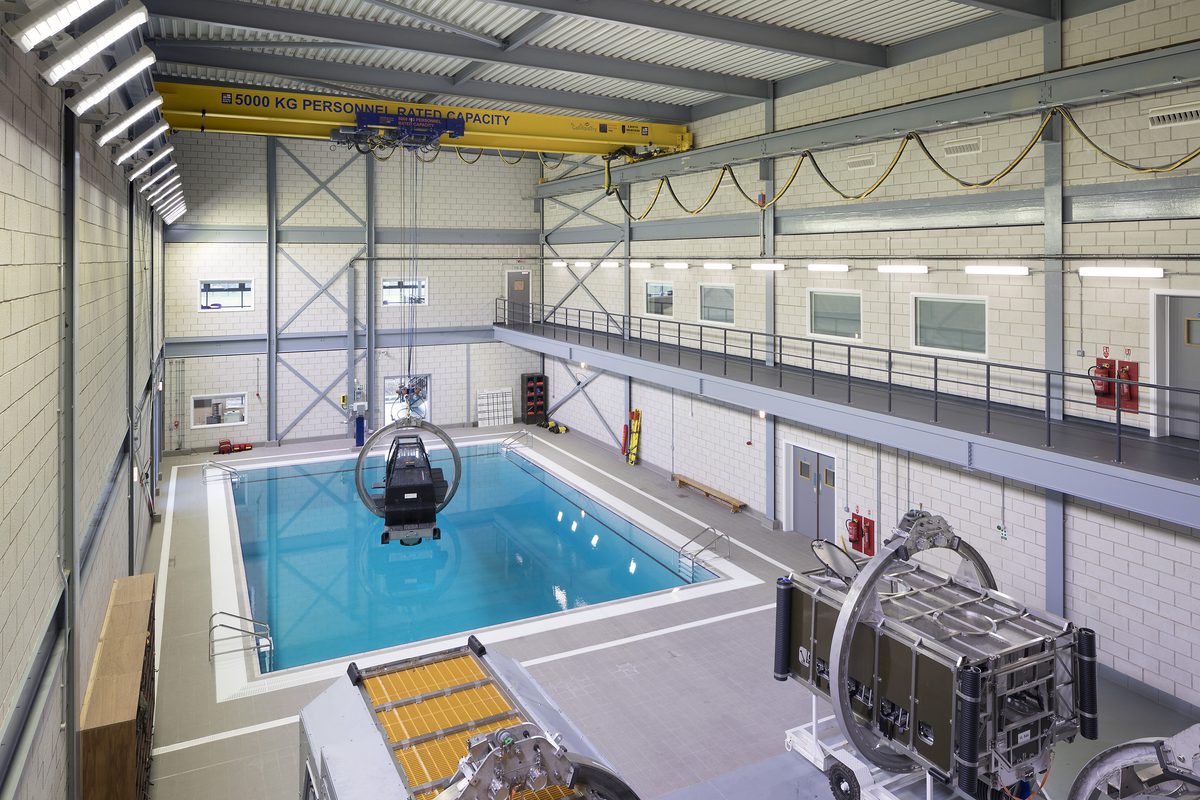
We have delivered the Royal Navy Centre of Maritime Training, the Typhoon Training Facility and Astute Class Training Facilities at HMNB Clyde, and the Installed Engine Test Facility at RAF Lossiemouth. Our security-cleared teams understand the particular demands of working in live, sensitive environments – and our cross-sector experience in advanced manufacturing, aerospace and industrial facilities means we bring insight from beyond the defence estate as well as deep knowledge within it.



The missing piece
With all of that ambition and energy in the room, there was one topic that came up with almost every person Imran, Natasha and I spoke to - the Defence Investment Plan (DIP) remains unpublished.
This is worth dwelling on, because the DIP is not simply another policy document. It is the mechanism that turns the SDR’s vision into a funded, sequenced, actionable programme. It is what tells the supply chain where to direct its capacity, what to plan for and when. Without it, even the most committed and capable organisations are working from assumption rather than instruction.
There are understandable reasons why a document of this sensitivity and scale takes time to develop and publish. Some of its contents will inevitably remain classified. Getting the sequencing right, ensuring affordability and aligning the plan with the scale of investment now committed is genuinely complex work. We appreciate that, and at the conference, Minister for Defence Readiness and Industry Luke Pollard acknowledged the high level of anticipation surrounding the DIP. He confirmed it is actively in development and expected soon.
But the built environment has long lead times. The design, planning, procurement and delivery of the training facilities, operational buildings, accommodation and technical infrastructure that the SDR demands cannot be accelerated indefinitely to compensate for delayed direction at the front end.
The sooner the DIP provides clear commitment across the major capability pathways – from Atlantic Bastion to next-generation air, from the Sovereign Warhead Programme to the wider estate recapitalisation – the sooner the industry can align and respond effectively.
A world that cannot wait
The context in which all of this is unfolding makes the direction of travel all the more important. The SDR is clear that this is a generational challenge requiring a generational response – and the world since its publication has only reinforced that view.
Russia’s invasion of Ukraine continues to reshape European security. China’s military modernisation accelerates. And more recently, the conflict involving the United States and Israel against Iran has added a further and significant dimension to global instability, with implications for maritime security, energy supplies and the threat environment that the UK and its allies must now plan against. The interconnected nature of these challenges – and the way in which adversarial relationships are deepening across Russia, China, Iran and North Korea – is precisely the context the SDR was written to address.
Against this backdrop, the UK’s commitment to leading in NATO and taking on greater responsibility for European and global security is both right and necessary. The armed forces, and the estate that supports them, must be ready for that role. The industry stands ready to help build that readiness.
What comes next
I left Farnborough genuinely optimistic. The SDR sets out an ambitious and credible direction of travel. The industry is engaged, collaborative and ready. The conversations at DPRTE reflected a sector that understands the moment and wants to rise to it.
At AHR, we look forward to being a strong and committed partner through what comes next. Our multidisciplinary team – architecture, building consultancy, masterplanning, landscape and interior design – gives us the breadth to support everything from complex estate strategy to individual facility delivery. Our track record in security-cleared, high-sensitivity environments means we can hit the ground running. And our experience across defence, advanced manufacturing, aerospace, residential and infrastructure means we bring a range of perspectives that consistently add value on the most complex briefs.
The strategic vision is in place. The ambition is clear. The industry is ready and willing. The Defence Investment Plan, when it arrives, will be the starting gun for a programme of work that is both significant and necessary. We are looking forward to it.
Frequently asked questions
The SDR sets the UK’s long-term defence direction, including spending and capability priorities. It shapes how the defence estate must evolve to support future operations.
The SDR outlines major funding, including £7bn for accommodation, £6bn for munitions and significant investment in infrastructure and digital capability.
The DIP will translate the SDR into a clear, funded programme. It will guide what is delivered, when and how the supply chain can respond.
Without the DIP, organisations are planning without firm direction. Clear sequencing and commitment will help align the industry and accelerate delivery.
We bring multidisciplinary expertise across architecture and building consultancy, with experience in secure environments, training facilities and complex estates, helping deliver safe, resilient and future-ready places.
Posted on:
Apr 29th 2026
Topics:
Share on
Related Articles

Thought Leadership
From legacy to resilient: rethinking the UK defence estate
Stuart Bryson explores what strategic estate thinking looks like in practice, and why investing in a greener, more resilient defence estate is not a compromise. It is a strategic advantage.
Date: 1 Dec 25
by Stuart Bryson
Regional Director, Architecture

Practice News
Stuart Bryson to lead AHR’s defence sector group
We're delighted to announce regional director Stuart Bryson's appointment to lead our defence sector group, helping to strengthen the UK defence estate.
Date: 11 Mar 26

by AHR

Thought Leadership
Security, resilience and wellbeing: designing defence facilities that perform
Stuart Bryson explores how we design resilient, adaptable defence facilities that balance stringent security with human-centric environments to boost performance.
Date: 16 Apr 26
by Stuart Bryson
Regional Director, Architecture

Thought Leadership
What the Defence Industrial Strategy means for the built environment and where specialist expertise makes the difference
We explore what the Defence Industrial Strategy actually demands from the built environment, and where genuine cross-sector expertise makes a real difference.
Date: 23 Mar 26