Thought Leadership
What the Defence Industrial Strategy means for the built environment and where specialist expertise makes the difference

by AHR
The Defence Industrial Strategy (DIS) 2025 signals something genuinely significant. Not just increased spending on military capability, but a sustained, long-term commitment to rebuilding the UK's sovereign industrial base.
New munitions factories. Expanded submarine and aircraft production. Nuclear warhead programme facilities. Advanced manufacturing investment flowing into communities and regions across the country.
The urgency behind this investment is not happening in a vacuum. The recent conflict in the Middle East, alongside the war in Ukraine, has sharpened the focus of governments and defence establishments across NATO on sovereign capability and industrial readiness, reinforcing that the ability to produce, sustain and scale defence capability at home is not a long-term ambition, but an immediate strategic necessity.
The ambitions of the DIS cannot be realised without the right facilities, in the right places, designed and delivered to standards that are technically exacting, operationally demanding and often subject to some of the most stringent security and regulatory requirements in the construction sector.
The central question for everyone involved in getting these programmes off the ground is the same, whether you are commissioning facilities for the MoD, investing in a manufacturing site to meet growing defence programme demand, or assembling a delivery team for a complex industrial project: which design and delivery partners genuinely understand these environments?
Where defence and advanced manufacturing converge
The most significant aspect of the DIS 2025, from a built environment perspective, is how directly it connects the defence estate with the UK’s advanced manufacturing and industrial base.
The facilities this strategy requires sit at the intersection of two already demanding sectors. Submarine production halls, engine testing facilities, munitions manufacturing environments and nuclear programme infrastructure all combine the security, compliance and operational continuity demands of defence with the precision engineering, complex building services, production sequencing and phasing, specialist lifting and handling, and hazardous area requirements of advanced industrial buildings.
This is not a combination that most design teams can credibly address. It requires genuine depth of experience in both sectors, and the ability to bring them together in a way that serves the specific, often unique requirements of each project.
At AHR we have built that experience deliberately. Our defence portfolio spans operational facilities, specialist training environments and technically complex buildings including the Typhoon Installed Engine Test Facility at RAF Lossiemouth, Astute Class Training Facilities at HMNB Clyde, and our current work on the Defence Estate Optimisation Programme Air North project at RAF Boulmer and RAF Leeming alongside Galliford Try.
Our advanced manufacturing and industrial portfolio includes Siemens’ rail manufacturing facility at Goole, the Airbus Wing Integration Centre at Filton, long-term facilities delivery for Bentley Motors and our contribution to the UK nuclear programme at Hinkley Point C.


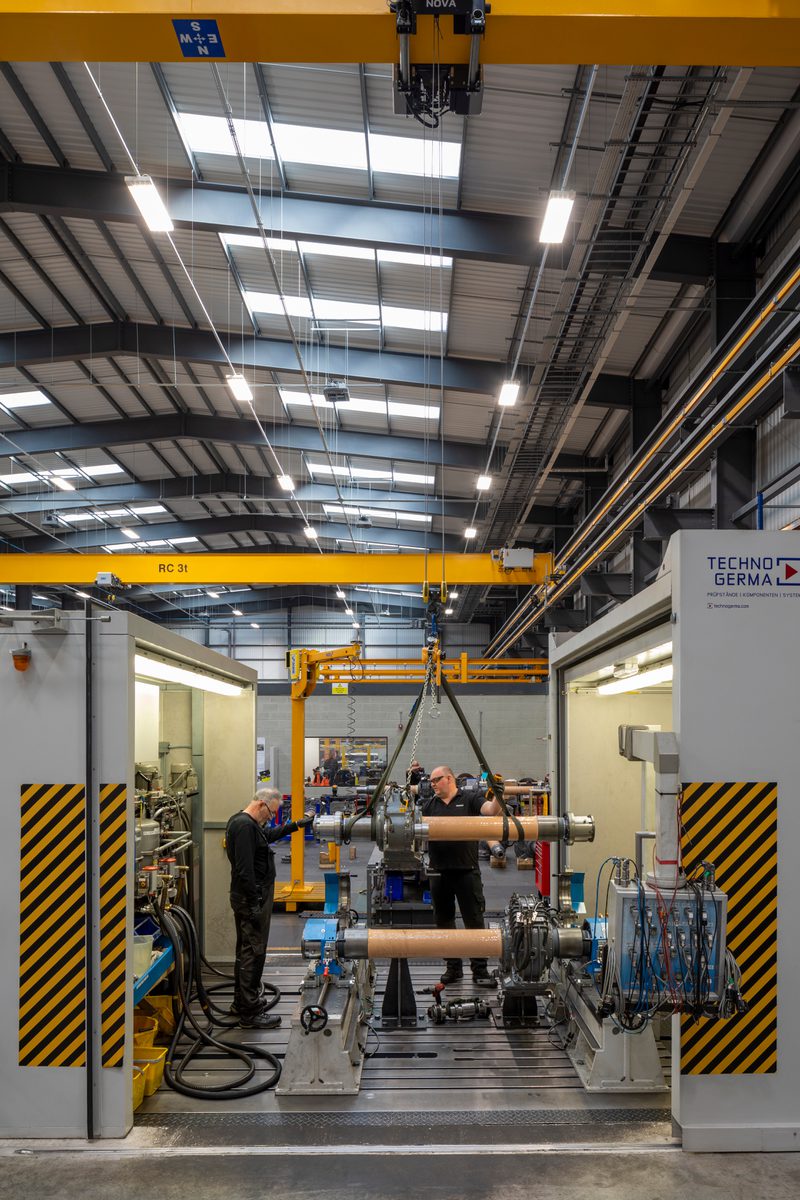
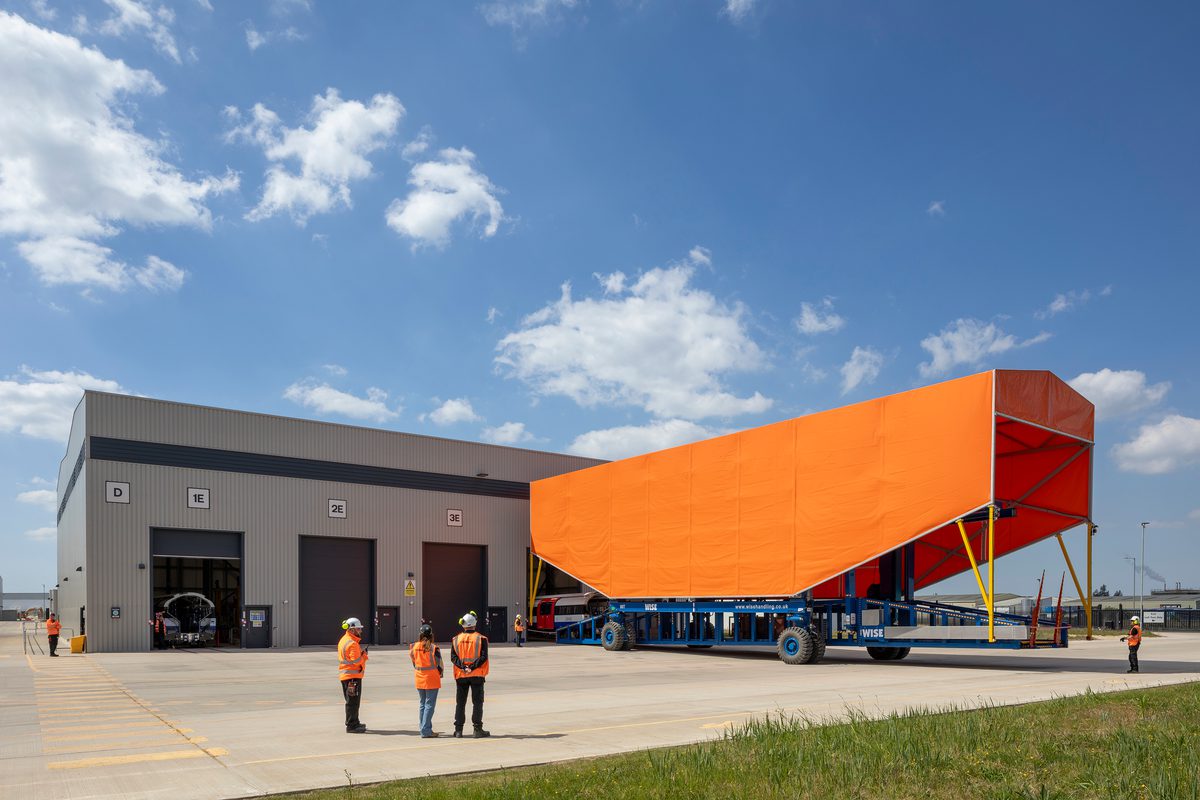
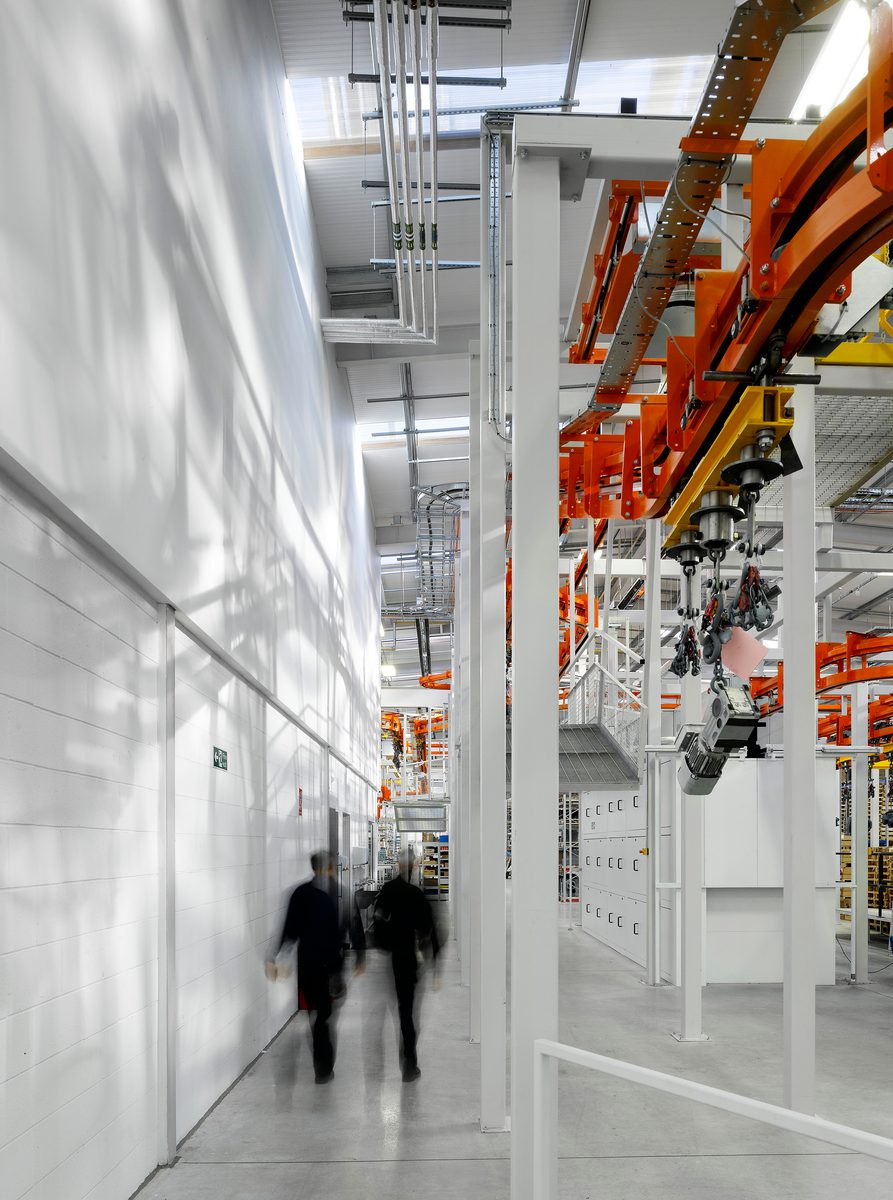
These two bodies of work are not separate. They are mutually reinforcing. The discipline of working within live defence environments, managing security clearances, complex approval processes and strict operational continuity, transfers directly to advanced manufacturing settings where production cannot be interrupted and technical specifications are equally demanding. The expertise in precision engineering facilities, large-span structures, complex building services and hazardous area classification developed through manufacturing and industrial work translates directly into the specialist defence facilities the DIS requires.
Very few practices can draw on both. Where they converge, the value to clients, programmes and delivery teams is substantial.
The technical reality of DIS facilities
It is worth being direct about what these buildings actually demand, because it is easy to underestimate the complexity from the outside.
Munitions and energetics facilities require specialist knowledge of hazardous area classification, blast mitigation strategy, controlled storage design and safe production environments. Get these decisions wrong at the design stage and the consequences extend well beyond cost and programme.
Submarine production infrastructure demands large-span, highly controlled structures with precision environmental management, specialist crane and handling systems, and the ability to deliver and commission complex building systems within a live production environment that cannot be paused.
Nuclear facilities sit within a regulatory framework of exceptional complexity. Design teams working on nuclear-related buildings must understand nuclear safety cases, quality assurance regimes and the particular demands of nuclear construction, including the documentation, traceability and assurance requirements that apply at every stage.
These are not areas where competence can be assumed from a strong general portfolio. They require specific, demonstrable experience and the ability to engage with specialist stakeholders, regulators and delivery partners from a position of genuine technical credibility.
Who this matters to and why
The DIS investment pipeline involves a diverse set of organisations, each with different relationships to the built environment challenge it creates.
MoD and DIO clients commissioning programme facilities need delivery confidence above all else. Specialist buildings of this type carry significant programme and cost risk when commissioned from teams without genuine experience in these environments. Early investment in the right design expertise pays back many times over through avoided rework, smoother approvals and better long-term asset performance.
Advanced manufacturing and industrial businesses investing in facilities to meet growing defence programme demand operate in a different procurement environment, often outside formal MoD frameworks, but face equally demanding technical requirements. They need design partners who understand production efficiency, operational flexibility and the specific regulatory requirements of defence-related manufacturing, and who can deliver within commercially driven programmes without compromising technical standards.
For principal contractors, programme managers and specialist consultants assembling delivery teams, the design partner’s ability to integrate effectively within complex consortia, manage multi-discipline coordination and maintain programme certainty through demanding approval and gateway processes is what matters most. A design team that understands how decisions made at RIBA Stage 1 affect programme and cost at Stage 5 is a fundamentally different proposition from one that is still developing that understanding.
Across all of these relationships, the common thread is the same. The most valuable design partners in DIS-related work are those that bring genuine, demonstrable expertise in the environments they are working in, from day one.
The regional opportunity
The DIS 2025’s five Defence Growth Deals create regional investment frameworks that extend the opportunity well beyond the direct MoD and prime contractor supply chain.
The five areas reflect the geography of the UK’s sovereign industrial base: the North West, centred on the submarine programme and related advanced manufacturing; the South West, home to naval and aerospace industries; the East of England, with significant defence technology and electronics presence; Scotland, with its naval bases and advanced manufacturing capability; and Wales, with its established defence manufacturing and MoD training estate.
Defence industrial investment at this scale creates built environment demand well beyond the factory or shipyard boundary. Growing workforces need housing, schools, transport and community infrastructure. Our experience across all of these building types means we can support clients across the full picture, not just the industrial and defence facilities at its centre.
In each of these regions, that creates a sustained pipeline of built environment work spanning industrial facilities, supply chain infrastructure and the wider community buildings that must keep pace. With nine UK offices, AHR has genuine regional presence across all of these areas, bringing national scale capability with local knowledge and established relationships with planning authorities and delivery partners.
The opportunity is real. So is the bar
The ambitions of the Defence Industrial Strategy are substantial and the investment commitment behind them is credible. For the built environment sector, this represents a genuinely significant pipeline of technically complex, high-value work.
But the bar for meaningful participation is also real. These are not programmes where a strong general portfolio and an interest in the sector are sufficient. The clients, contractors and consultants who will deliver the DIS will be looking for partners who can demonstrate genuine expertise in the environments they are being asked to work in.
Where defence experience and advanced manufacturing expertise genuinely converge, that bar can be met with confidence. That is where we believe AHR sits, and where we welcome the opportunity to demonstrate it.
Meet us at DPRTE 2026
Get in touch


If you are attending DPRTE in Farnborough, Stuart Bryson will be there alongside colleagues Imran Kassim and Natasha Woods and would be pleased to discuss how our experience can support your programme.
Frequently asked questions
DIS 2025 is the UK’s long-term plan to rebuild sovereign defence manufacturing capacity. It creates major demand for defence estate construction, including munitions factories, submarine production, and nuclear programme facilities, all requiring high-security, highly regulated delivery.
The strategy drives projects such as munitions and energetics plants, submarine production halls, engine test facilities, aircraft and aerospace manufacturing expansion, and nuclear infrastructure, plus wider housing, transport, schools and community infrastructure to support workforce growth.
DIS facilities combine defence security and compliance with advanced manufacturing precision. Teams need proven experience in areas like hazardous area classification, blast mitigation, complex MEP/building services, specialist lifting/crane systems, and delivering work in live operational environments without interrupting production.
Common challenges include stringent security requirements, complex approvals and gateways, and sector-specific rules, especially for nuclear facilities, which require understanding of nuclear safety cases, quality assurance, and end-to-end documentation, traceability and assurance.
DIS 2025 highlights five regions for investment: North West, South West, East of England, Scotland, and Wales. These areas are expected to see sustained pipelines across defence manufacturing buildings, supply chain sites, and supporting regional infrastructure.
Posted on:
Mar 23rd 2026
Topics:
Share on
Related Projects

Dreghorn Barracks
Alongside new accommodation, we delivered offices, training facilities, workshops, welfare spaces, duty-staff sleeping and changing / shower facilities.

Kinloss Barracks
We delivered two modular junior ranks SLA blocks designed to Passivhaus principles, replacing older accommodation and improving comfort and wellbeing.

Stafford Barracks
We shaped a modular single living accommodation (SLA) building designed to Passivhaus principles, providing high quality bedrooms and communal space aligned with MoD guidance.