Thought Leadership
From legacy to resilient: rethinking the UK defence estate

by Stuart Bryson
Regional Director, Architecture
The Strategic Defence Review (SDR) 2025 makes a commitment that will shape the built environment for a generation. The largest sustained increase in defence spending since the Cold War, with billions committed to improving the places where military personnel live, work and train.
Behind the ambition sits a more complex reality. Much of the UK’s defence estate is old. Some of it is very old. Decades of underinvestment have left a significant proportion in poor condition, expensive to maintain and ill-suited to the demands of a modern, technology-enabled military.
The SDR acknowledges this directly. The question is not whether investment is needed. It is how to deploy it wisely across an estate that ranges from world-class operational facilities to buildings that should have been replaced years ago.
Some argue that in a more dangerous world, national security must take precedence and that sustainability considerations risk slowing or complicating defence investment. The evidence from projects across the defence estate tells a different story. Sustainability and national security are not in conflict. Properly understood, they are complementary.
A defence estate that is energy-efficient, resilient and designed for long-term performance is a stronger strategic asset than one that is expensive to run, carbon-intensive and dependent on energy sources that carry their own security risks.
Getting this right requires more than a programme of new construction. It requires strategic thinking about the estate as a whole.
The condition of the legacy estate
The Ministry of Defence (MoD) manages one of the largest and most complex property portfolios in the country. It encompasses hundreds of sites across the UK and internationally, ranging from major naval bases and air stations to small garrison sites, training areas and administrative facilities. The diversity of this estate is both its strength and its challenge.
A significant proportion of these buildings were constructed in the mid-twentieth century, designed for a very different operational context. Many have been maintained to minimum acceptable standards rather than systematically improved. Piecemeal upgrades have added complexity over the years without fundamentally addressing underlying performance.
The consequences are significant. Poor energy performance drives high operational costs. Ageing building fabric creates maintenance burdens that absorb resource better deployed elsewhere. Substandard accommodation affects the wellbeing and retention of military personnel. And buildings designed for analogue operations struggle to support the digital infrastructure, data connectivity and flexible working patterns that modern defence requires.
The SDR’s call for a Defence Infrastructure Recapitalisation Plan, due by February 2026, signals that the Government understands the scale of what is needed and is committed to developing a coherent framework for addressing it.
Understanding the carbon challenge
The MoD is one of the largest energy consumers in the UK public sector. Operational facilities, data centres, training and simulation environments, workshops, maintenance facilities and residential accommodation all carry significant energy loads well beyond those of a standard commercial or residential building. Reducing the carbon footprint of this estate requires addressing two distinct challenges.
Operational carbon is the energy consumed in running a building over its lifetime. Improving insulation, upgrading building services and installing renewable energy generation all reduce it, delivering measurable cost savings over the life of the asset.
Embodied carbon covers the carbon associated with the manufacture, transport and construction of building materials. It is increasingly recognised as equally significant, particularly as operational carbon falls through improved standards and grid decarbonisation. For a major defence construction programme, the embodied carbon implications of material selection, structural system and construction methodology can be very substantial.
Modern methods of construction, including modular and offsite fabrication, support reductions in both. Factory-controlled production reduces material waste, improves quality control of the building envelope and minimises disruption on live operational sites.
One of the most important decisions in any estate investment programme is where to refurbish and where to rebuild.
In a defence context, this complexity is compounded by security constraints, operational continuity requirements and the heritage significance of many sites."
Stuart Bryson
Defence Sector Lead
The instinct to build new is understandable. New buildings can be designed to current standards, incorporate modern construction methods and be planned around contemporary operational needs. In some cases, new build is clearly the right answer, particularly where existing buildings are beyond economic repair or where site layout needs to change fundamentally.
But defaulting to new build deserves scrutiny. Refurbishment and retrofit of existing buildings can deliver very significant improvements in performance, often at lower cost and with considerably lower embodied carbon than demolition and replacement. The sustainability challenge in defence is not primarily about new buildings. It is about the vast existing estate, much of which was built to standards that bear no relationship to current expectations of energy performance.
Our experience across the defence estate suggests the most effective approach is almost always a mixed one. A robust condition survey and estate assessment provides the evidence base to make these decisions rationally. Understanding the structural condition of existing buildings, their energy performance, their remaining asset life and their capacity to be upgraded allows investment to be directed where it will deliver the greatest return.
At AHR we have delivered both new build and refurbishment programmes across the defence estate. Our building consultancy teams are experienced in the assessment work that informs these decisions, and the two capabilities work best when fully integrated, with assessment and design thinking happening in parallel rather than in sequence.
Passivhaus and high-performance design
Passivhaus is the most rigorous energy performance standard available for building design. It demands exceptional levels of fabric performance, airtightness and controlled ventilation, delivering buildings with very low operational energy demand and genuinely comfortable internal environments.
It is sometimes assumed that Passivhaus is difficult to achieve within the constraints of defence procurement, where prescriptive technical requirements and complex security specifications may seem to conflict with the design freedom that high-performance standards require. Our experience demonstrates this assumption is wrong.
At Kinloss Barracks and Stafford Barracks, we delivered modular single living accommodation (SLA) buildings designed to Passivhaus principles, meeting all MoD procurement requirements. These buildings exceed near zero carbon standards and achieve Excellent ratings under the Defence Related Environmental Assessment Method (DREAM), providing genuinely high quality living environments for the people who live in them.


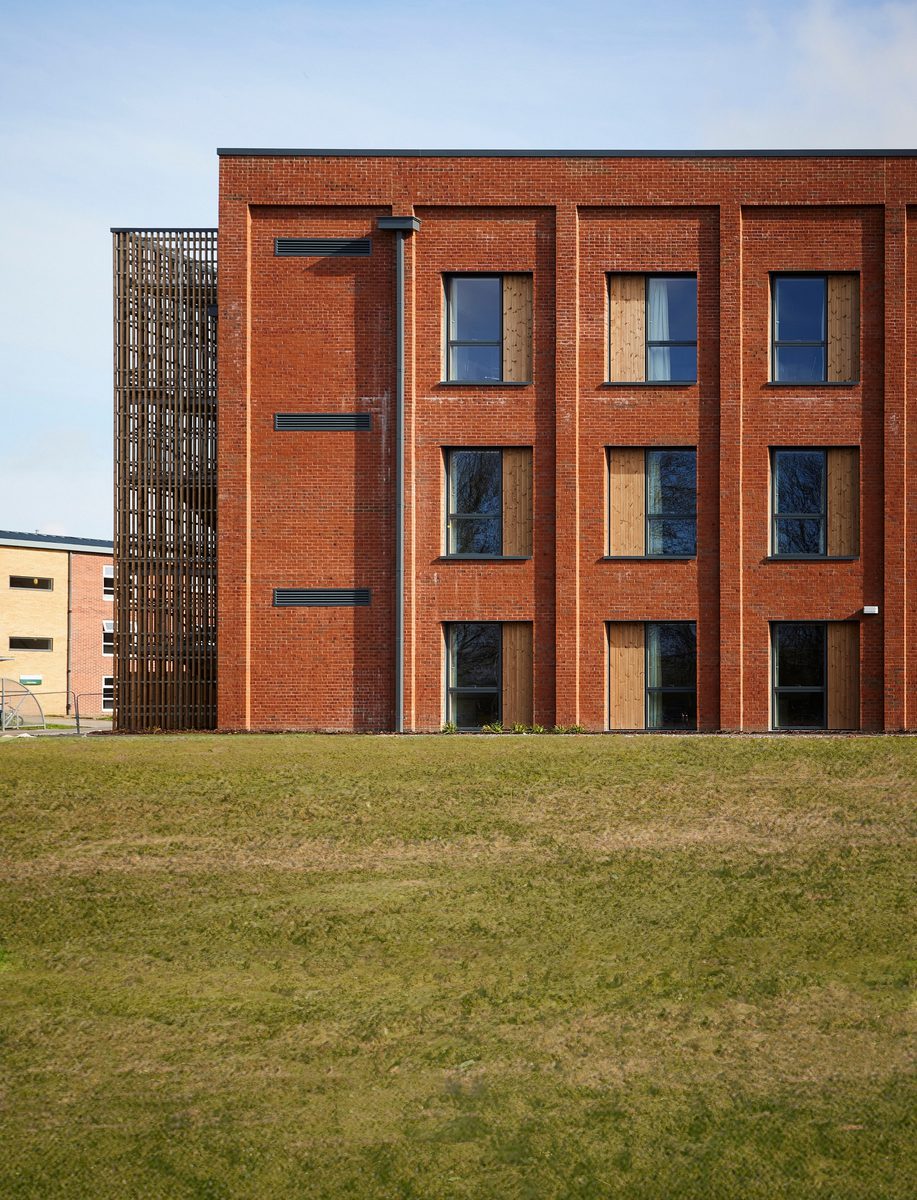
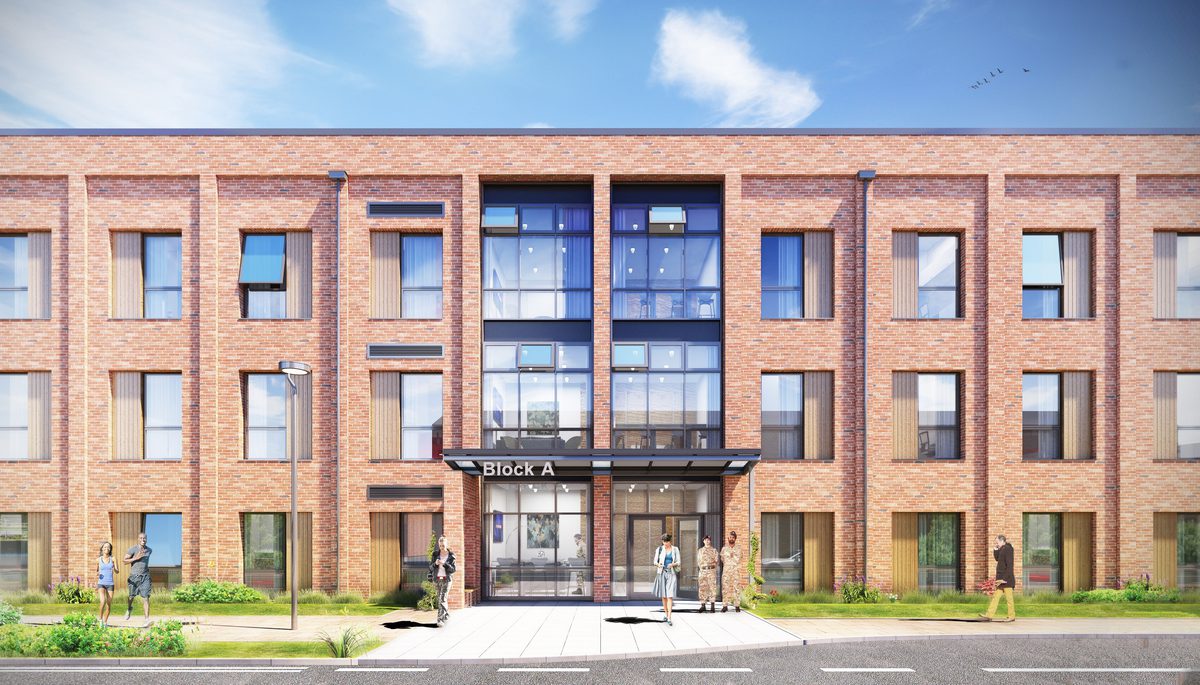
Sustainability and operational performance are not competing priorities. Properly integrated from the outset, they reinforce each other. As the SDR drives a substantial increase in accommodation investment across the defence estate, the opportunity to embed these standards across a much larger portfolio is significant.
Whole-life value and asset management
Defence estate investment decisions are increasingly evaluated on a whole-life basis rather than simply on initial capital cost. This is the right approach. A building that is cheap to construct but expensive to operate and maintain over a thirty-year lifespan is not good value for the public purse.
Higher levels of insulation, better quality building fabric, more durable materials and more efficient building services all cost more upfront but reduce operational expenditure over the life of the asset. In a portfolio as large as the defence estate, even marginal improvements in energy performance or maintenance requirements compound into very significant savings at scale.
This is one of the reasons we advocate for fabric-first approaches to building design and retrofit. Reducing energy demand through the quality of the building envelope is more reliable and more cost-effective over time than compensating for poor fabric performance with complex engineering systems.
Asset management strategies also need to reflect the operational realities of the defence estate. Buildings subject to intense use, strict security protocols and limited access windows for maintenance need to be specified accordingly. Durable, low-maintenance materials and robust building systems reduce the burden on estate management teams and extend the effective life of assets.
The integration of smart building technologies, energy monitoring and data-driven estate management supports both the sustainability agenda and the digital transformation that the SDR promotes across defence more broadly.
Social value: beyond the site boundary
Sustainability in the defence estate extends beyond the environmental performance of individual buildings. The social value generated through defence construction programmes, in skills development, employment, supply chain investment and community benefit, is an increasingly important dimension of how these programmes are evaluated.
The Defence Growth Deals explicitly link defence industrial investment with regional economic development and community benefit. Construction programmes associated with defence estate investment represent an opportunity to deliver social value at significant scale, through apprenticeships, local employment, supply chain development and investment in the built environments of defence communities.
Designing for social value means thinking beyond the site boundary. How does a construction programme invest in local skills and employment? How does the design of defence facilities contribute to the wider quality of the communities they sit within? How can new community infrastructure including housing, green space and public realm be planned in coordination with defence investment to create places that work for everyone?
These questions sit at the heart of what good masterplanning and community-focused design should be asking. They are also central to the social value agenda increasingly embedded in public sector procurement.
Thinking about the estate, not just the building
Perhaps the most important shift in defence estate investment is from a building-by-building mindset to an estate-level one.
Individual projects are inevitably driven by specific operational requirements and budget allocations. But the decisions made on individual projects accumulate into an estate, and if those decisions are not made within a coherent strategic framework they can create as many problems as they solve. A new building in the wrong location, a refurbishment that does not account for future site development, or an infrastructure investment that constrains later options all represent real costs to the estate over time.
Masterplanning provides the framework for better decisions at every level. It allows individual project decisions to be tested against long-term estate ambitions, infrastructure sequencing to be properly considered and phasing to be planned in a way that maintains operational continuity throughout a programme of investment.
As the Defence Investment Plan takes shape, the organisations best placed to benefit are those that have done this strategic thinking already. Understanding what you have, what it costs to run, what condition it is in and what you want it to become in ten or twenty years is the essential foundation for effective investment.
A strategic opportunity
The scale of commitment in the SDR creates a genuine opportunity to shift the sustainability and resilience profile of the UK defence estate. New buildings designed to high-performance standards, retrofit programmes that systematically improve the existing estate and construction programmes that generate social value in defence communities all contribute to an estate that is not only more operationally effective but more sustainable, more resilient and more economically beneficial.
This is not a soft agenda. It is a strategic one. An estate that costs less to run, generates less carbon and supports stronger communities is a stronger asset for the long term. The argument that sustainability and national security are in tension underestimates both.
Strategic thinking, evidence-based decision-making and integrated design and consultancy capability are what translate investment into a defence estate that is genuinely fit for the future.
Discover more of our expertise across the defence sector
Frequently asked questions
SDR 2025 commits to the largest sustained uplift in defence spending since the Cold War, including major investment in accommodation and infrastructure. It sets the direction for modernising where personnel live, work and train, and calls for a Defence Infrastructure Recapitalisation Plan by February 2026.
Many sites were built in the mid‑20th century and have seen decades of underinvestment and piecemeal upgrades. The result is poor energy performance, high running costs, significant maintenance burdens, accommodation that can impact wellbeing and retention, and buildings that struggle to support modern digital and operational requirements.
Operational carbon is the energy used to run buildings over their lifetime (heating, cooling, power, etc.). Embodied carbon is the emissions associated with materials and construction (manufacture, transport, assembly). Defence programmes must address both, especially as operational emissions reduce over time with better standards and grid decarbonisation.
New build is appropriate where assets are beyond economic repair or the site layout must change fundamentally. However, refurbishment/retrofit can often deliver major performance improvements at lower cost and with much lower embodied carbon. A robust condition survey and estate-wide assessment (structure, energy performance, remaining life, upgrade potential) is key to making evidence-based decisions.
Posted on:
Dec 1st 2025
Topics:
Share on
Related Projects

Dreghorn Barracks
Alongside new accommodation, we delivered offices, training facilities, workshops, welfare spaces, duty-staff sleeping and changing / shower facilities.

Royal Navy Centre of Maritime Training
The centre provides essential survival training for helicopter incidents or accidents over water.

UK Hydrographic Office
Winner of the British Council for Office’s Best of the Best Workplace, this transformational workplace encourages new ways of collaborative working.