Thought Leadership
Sustainable Communities for Learning: Building Wales’s next generation of schools

by Gary Overton
Director, Architecture

Wales has set out one of the most ambitious and coherent programmes for school transformation in the UK. Through Sustainable Communities for Learning, the Welsh Government looks beyond building condition to prioritise long-term educational quality, inclusion, net zero carbon and community benefit.
Formerly known as 21st Century Schools, the programme reflects a clear policy shift: capital investment must not only resolve immediate pressures, but continue to deliver value for learners, communities and the environment for decades to come.
A long-term programme with clear purposes
Since 2014, every local authority in Wales has benefitted from sustained investment in schools and colleges, with £3.6bn delivered across more than 330 projects and a further £5.4bn pipeline now in development. This scale of investment is underpinned by a consistent national framework rather than short-term funding rounds.
Programme guidance makes clear that projects should address demand management, curriculum delivery, accessibility, Welsh-medium provision and efficient use of the existing estate. Importantly, it supports a wide range of interventions - from new builds and extensions to deep refurbishment, rationalisation and repurposing - where these deliver the best long-term outcomes.
Business-case discipline from the outset
A defining feature of Sustainable Communities for Learning is its robust, staged business-case process. Proposals must demonstrate strategic fit, value for money, affordability and deliverability at each stage, aligning education investment with wider public-sector objectives.
Inputs into estate strategy, demand modelling, site appraisal and refurbish-versus-replace analysis are central to shaping viable options. Strong evidence is as important as strong design. This disciplined approach supports better decisions and reduces the risk of piecemeal investment that stores up future cost or constraint.
 Bringing high quality education back to the community
Net zero and sustainability: from ambition to delivery
Wales has taken a clear lead by mandating net zero carbon in operation for all major school projects since 2022, alongside a tightening pathway for embodied carbon. These requirements reflect both climate commitments and the operational realities facing public estates.
Design responses increasingly combine fabric-first principles, compact massing, optimised orientation, low-carbon heating, renewables and careful material selection. Landscape strategies support biodiversity, sustainable drainage and outdoor comfort, reinforcing links between environmental performance and wellbeing.
At Woodmill and St Columba’s RC High School, this approach has been tested at scale. In addition to being the world’s largest certified Passivhaus education building, the project was submitted to the pilot testing programme supporting the development of the UK Net Zero Carbon Building Standard. Using real project data enabled whole-life carbon outcomes to be examined in practice, reinforcing how design intent, construction quality and operational performance must align to deliver genuinely low-carbon schools.
This experience is informing wider work across the UK, including the delivery of GenZero Schools for the Department for Education in England, where standardised, low-carbon models are being developed to balance net zero ambitions with affordability, scalability and predictability - challenges equally relevant to Wales.
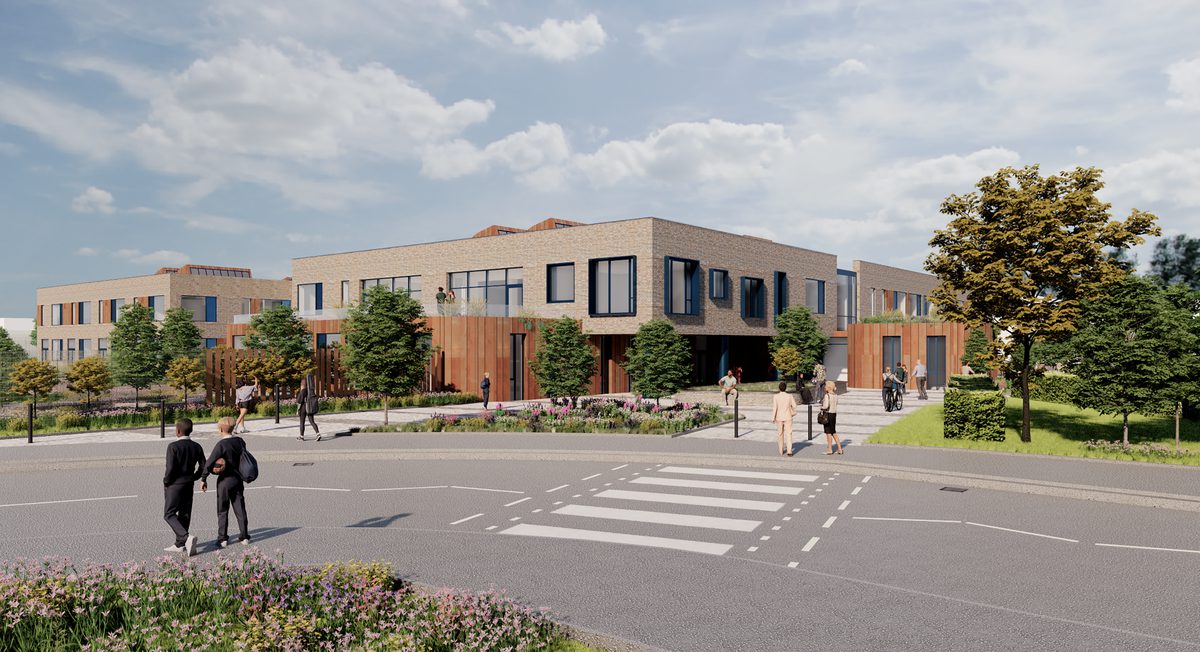
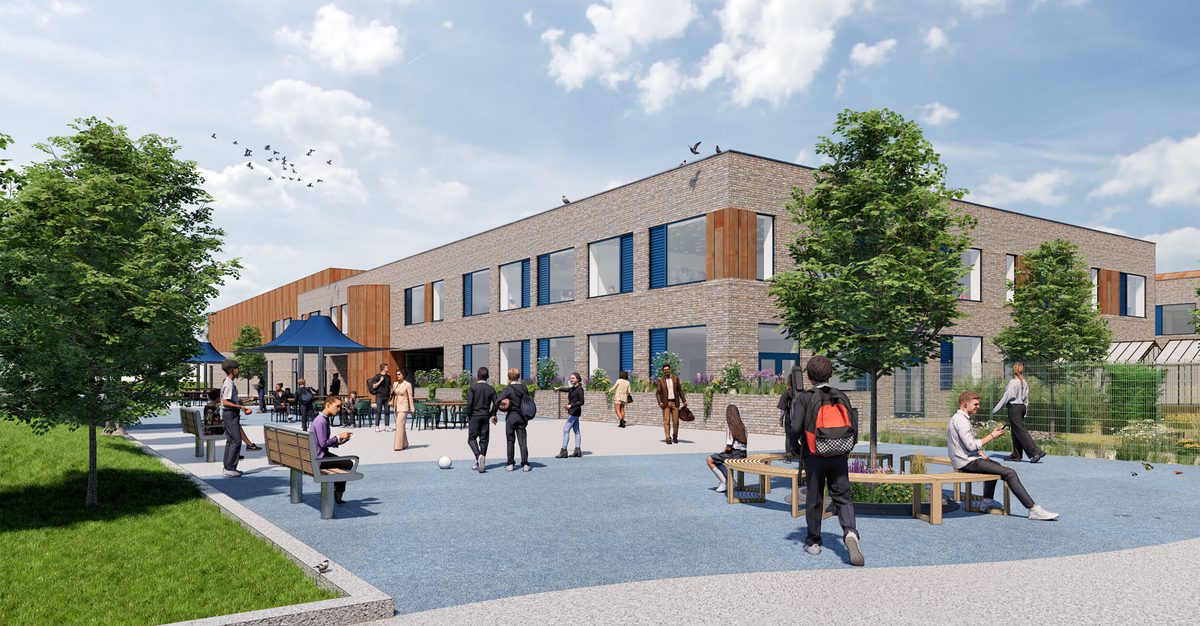
Within Wales, sustainability ambitions are increasingly integrated with inclusion and community outcomes. At Willows High School, we acted as technical advisor, establishing design principles for the school’s relocation to a prominent new site. The project will support 900 pupils alongside a co-located Special Resource Base for 30 learners, demonstrating how inclusive provision and long-term sustainability can be embedded from the outset.
Elsewhere, projects such as Rhyl High School and Christ the Word Catholic School illustrate how low-energy design, robust construction and adaptable learning environments can support both environmental performance and long-term educational value across the Welsh school estate.


Designing with pupils and communities
A distinctive strength of the Welsh approach is its commitment to meaningful engagement. Through initiatives such as the Sustainable Schools Challenge, pupils are encouraged to play an active role in shaping the environments in which they learn, helping them understand sustainability, materials and the long-term impact of design decisions.
When young people and local communities are involved early, design becomes a learning tool in its own right. Discussions about energy use, materials, outdoor spaces and adaptability can inform both the physical outcome and the educational experience, supporting greater ownership and awareness of how buildings perform.
This emphasis on co-design aligns closely with the Curriculum for Wales and the Well-being of Future Generations (Wales) Act, reinforcing the role of schools as places where education, environment and citizenship come together - and where the process of design is as valuable as the finished building.
Supporting Additional Learning Needs and inclusion
Improving provision for learners with Additional Learning Needs (ALN) is a clear priority within the programme, with significant investment directed towards specialist and inclusive environments.
Inclusive design is treated as a core objective rather than a bolt-on. Effective responses include sensory-aware classrooms, quiet and breakout spaces, accessible circulation, legible layouts and external environments that cater for a wide range of needs. When embedded early, these measures support dignity, wellbeing and flexibility throughout a building’s life.
We’re also working with local authorities, including Ceredigion County Council, to help shape their response to the growing need for additional ALN places on complex existing sites.
Community-focused campuses
Sustainable Communities for Learning places strong emphasis on schools as community assets, available beyond the school day for sport, adult learning, cultural activity and support services.
This expectation shapes masterplanning and internal layout. Successful schemes clearly differentiate between secure teaching cores and community-facing zones that can operate independently. Thoughtful zoning, circulation planning and acoustic control allow buildings to be open, safe and adaptable, maximising community benefit without compromising educational focus.
Digital-ready learning environments
Programme guidance also reflects the increasing role of digital learning. New and refurbished schools are expected to support high-quality connectivity, resilient infrastructure and flexible spaces capable of adapting as pedagogy and technology evolve.
Design teams add value by planning for future upgrade paths and avoiding locked-in solutions that risk rapid obsolescence. Spatial flexibility, servicing strategies and good acoustic conditions all support technology-enabled learning without dictating how it must be delivered.
Regional, rural and linguistic considerations
Estate planning in Wales is closely linked to Welsh-medium and bilingual provision, as well as the needs of rural, coastal and post-industrial communities. Solutions that work in dense urban areas may not be appropriate in dispersed rural clusters or small coastal towns.
Successful projects respond sensitively to place, culture and language, while still meeting national expectations for sustainability, inclusion and community use.
Partnering for long-term value
Sustainable Communities for Learning is not a short-term funding initiative but a multi-phase, long-horizon programme that will shape Wales’s learning environments for a generation.
Authorities benefit most when they work with multidisciplinary partners able to support them from estate strategy through to detailed design and delivery, across new build, refurbishment and repurposing. Bringing together architecture, masterplanning, building surveying, geomatics, landscape and interiors within a single collaborative team helps ensure that strategy, design and delivery are aligned, and that schools perform well in use, not just on paper.
We’d welcome the conversation. Get in touch
Frequently asked questions
The Sustainable Communities for Learning programme is the Welsh Government’s long-term investment programme for schools and colleges, focused on inclusive, net zero, community-focused learning environments that deliver long-term value.
Yes. Since 2022, all major publicly funded school projects in Wales must achieve net zero carbon in operation, with increasing focus on embodied carbon reduction.
Initiatives such as the Sustainable Schools Challenge involve pupils directly in the design process, helping them understand sustainability and the long-term impact of design decisions.
Yes. Refurbishment, extension, rationalisation and repurposing are all supported where they provide better long-term value than replacement.
Projects that improve provision for learners with Additional Learning Needs are explicitly prioritised, with inclusive design embedded from the outset.
Posted on:
Feb 17th 2026
Topics:
Share on
Related Projects

Wellfield Academy
A GenZero national pathfinder school, the Wellfield Academy offers 900 secondary school places and is designed to achieve net zero carbon in operation.

Rhyl High School
Rhyl High School sets the standard for education buildings in Wales, demonstrating a commitment both to the quality of education and improving people’s life choices.

Woodmill and St Columba's RC High School
Inspiring better learning and nurturing future talent in the largest Passivhaus-certified education building in the world.
Related News
Scotland’s school estate: From recovery to reinvention
Thought Leadership
13 Feb 26
Creating places where people feel safe: introducing our new white paper on trauma-informed design
Practice News
2 Feb 26
Planning approved for Wellfield Academy, one of five GenZero national pathfinder schools
Project News
6 Jan 26