Practice News
Creating places where people feel safe: introducing our new white paper on trauma-informed design

by AHR
We're pleased to share our new white paper, developed in partnership with the University of Salford, which explores how trauma-informed design (TID) can help create environments where people feel safe, supported and confident.
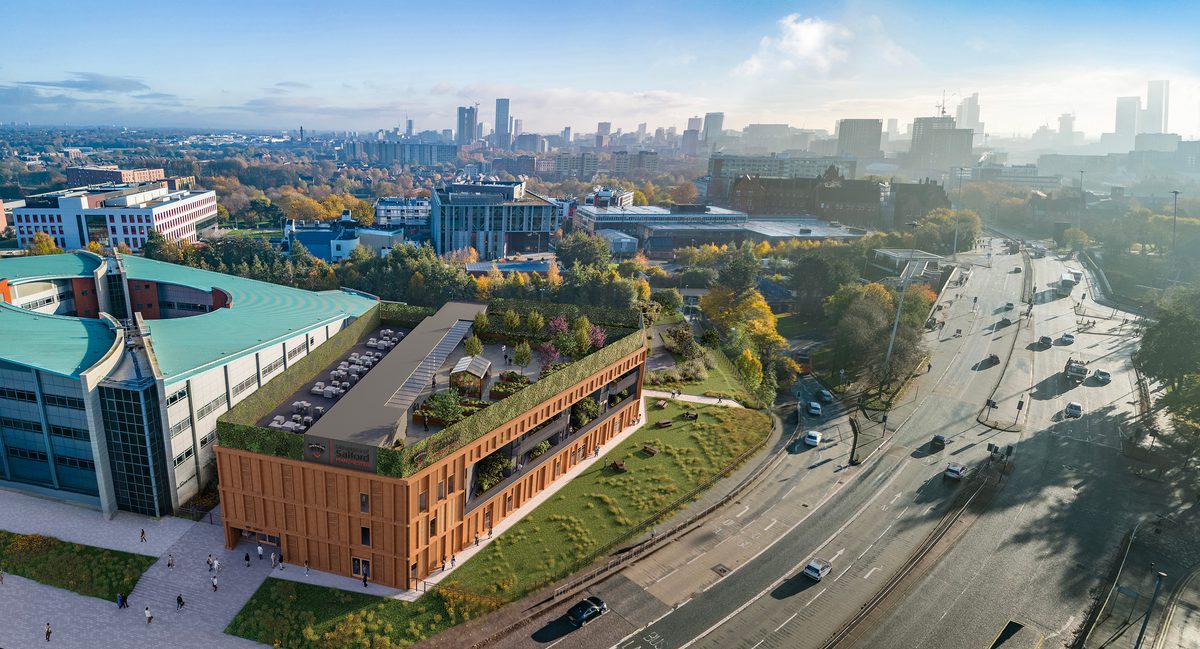
The research draws on our work shaping Thrive Health and Wellbeing Centre one of the UK’s first trauma-informed buildings. The project allowed us to test how principles from trauma-informed care can be translated into practical design decisions across sectors including education, healthcare and community settings.
The challenge many buildings still face
Many environments unintentionally create stress. Harsh lighting, unexpected noise and confusing layouts can undermine confidence and make everyday interactions harder than they need to be. Over time, these experiences affect wellbeing, engagement and how people feel about the places they use.
Working alongside academics, clinicians, students and community partners, we explored a different approach. One that starts with how people experience space, and asks how design can actively support emotional safety and clarity rather than simply avoiding harm. The result is a set of practical, evidence-informed principles that can be applied across a wide range of building types.


What made this work unique was bringing together clinical expertise, lived experience and design innovation. We've created an evidence base that moves trauma-informed design from theory into practice, with principles that can be applied far beyond education and healthcare settings."
Professor Victoria Halliwell
Pro Vice-Chancellor and Dean of School of Health and SocietyWhat you’ll gain from reading the white paper
The white paper brings together research, case study insight and clear frameworks to support real-world application. It explores:
- How trauma-informed and neuroinclusive design principles create calmer, more supportive environments
- Evidence-based approaches to sensory design, including acoustics, lighting and material selection
- How co-design processes can meaningfully incorporate lived experience into design decisions
- Practical strategies for maintaining trauma-informed values through building operation and management
- Why these principles benefit everyone, not just those with lived experience of trauma.
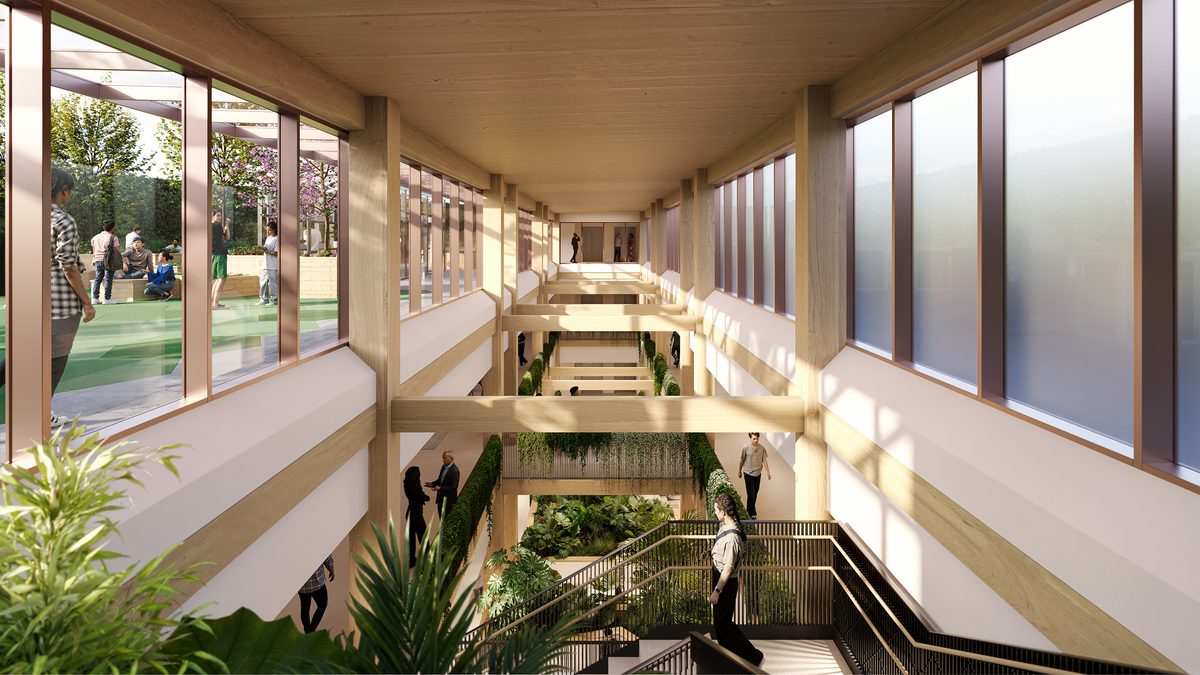
The paper includes visual material from Thrive Health and Wellbeing Centre, illustrating how these principles were applied to circulation, clinical teaching spaces, clinical and community areas and student facilities.
Creating great architecture is about designing the right experience for as many people as possible.
At Salford, we’ve brought together trauma-informed, neurodiversity-led and biophilic design principles to shape a space that feels intuitive and uplifting. From daylight and texture to wayfinding and sensory balance, every design decision supports comfort, confidence and connection, helping people to truly thrive within the building."
Robert Hopkins
Director and Head of Sustainability
Ready to explore trauma-informed design?
This white paper is your practical guide to trauma-informed design, created for estates teams, clinicians, educators, architects and anyone responsible for shaping healthier environments.
Thrive Health and Wellbeing Centre is the latest in a series of state of the art developments by the University of Salford across its Peel Park estate. The university is currently delivering a major phase of estate development in partnership with Salford City Council and ECF, contributing to the wider regeneration of this area of the city within Greater Manchester.
The TID-led design reflects the university’s ongoing interest in creating distinctive buildings that subtly challenge convention and help establish a benchmark for future developments within the sector.
Let's continue the conversation
Have questions about trauma-informed design?
If you’d like to explore how trauma-informed design principles might apply to your projects or would like us to present to your organisation, please get in touch.
Frequently asked questions
Trauma-informed design applies principles from trauma-informed care to the built environment. It recognises that buildings influence how people feel, how confidently they move through spaces and how easily they engage with learning or care. The approach focuses on four key principles: safety and trust, choice and empowerment, community and collaboration, and beauty and joy. These principles guide decisions about lighting design, acoustic design, wayfinding, material selection and spatial layout to create environments that feel calm, predictable and supportive.
We wanted to share practical, evidence-based guidance that helps others create more supportive environments. Working with the University of Salford on Thrive Health and Wellbeing Centre gave us the opportunity to explore trauma-informed design in depth. The collaboration involved academics, clinicians, students, estates professionals and community partners, and their insights shaped everything we learned. We believe this knowledge should be accessible to anyone designing or managing educational buildings, healthcare facilities, student wellbeing centres or community spaces.
We have shaped inclusive environments across higher education, healthcare, civic and community sectors, bringing together expertise in architecture, interior design, building consultancy, landscape design and masterplanning to create places that support diverse needs.
The white paper is relevant to anyone involved in shaping educational environments, healthcare settings or community buildings. Estates directors, university leaders, healthcare designers, architects, building surveyors, clinical educators, facilities managers and wellbeing professionals will find practical frameworks and case study insights they can apply. While the paper focuses on higher education and healthcare design, the principles are transferable to schools, civic buildings, workplaces and other environments where psychological safety and inclusion matter.
Yes. We're happy to share our research and experience with universities, healthcare organisations, estates teams and design professionals. If you'd like to explore how trauma-informed design principles might apply to your projects or would like us to present to your team, please get in touch.
Posted on:
Feb 2nd 2026
Topics:
Share on
Related Articles

Project News
Introducing the University of Salford's landmark building, Thrive Health and Wellbeing Centre
Discover how our design for the University of Salford's Thrive Health and Wellbeing Centre combines trauma-informed design, biophilia, specialist clinical teaching spaces and community access.
Date: 26 Nov 25
by AHR

Podcast
How is trauma-informed design transforming university spaces?
Guest Speakers: Robert Hopkins, Stefan Harris and Vicky Halliwell.
Date: 29 Aug 25

Hosted by Robert Hopkins
Director, Architecture

Thought Leadership
Designing for safety, dignity and belonging: Reflections from Learning Places Scotland 2025
Learn how trauma-informed and biophilic design create healthier, inclusive education environments, showcased by the Thrive Health and Wellbeing Centre at the University of Salford.
Date: 26 Nov 25
by Robert Hopkins
Director, Architecture

Thought Leadership
How trauma-informed design is shaping more inclusive spaces
In this piece, we explore what trauma-informed design means in practice and how it is shaping a more inclusive future for the built environment.
Date: 25 Jul 25