Thought Leadership
Designing for safety, dignity and belonging: Reflections from Learning Places Scotland 2025

by Robert Hopkins
Director, Architecture
Last week, I took part in a campfire session at Learning Places Scotland, exploring how trauma-informed design (TID) and wellbeing-led principles are reshaping the future of education design and healthy buildings.
It was inspiring to see a room full of estates leaders, designers and educators committed to improving student experience and creating more inclusive, equitable learning environments. For many, TID is still a new concept, so I used the session to step back, explain the foundations and share how we have embedded these principles at scale at the University of Salford’s new Thrive Health and Wellbeing Centre.
This article reflects on that discussion.
Why trauma-informed design matters
Trauma is far more widespread than many understand. Research shows that over half of the UK population will experience some form of trauma during their lifetime. Trauma affects concentration, trust, sensory processing, stress regulation and the ability to navigate unfamiliar or ambiguous environments - all of which directly relate to how people experience the built environment.
This is why TID is not limited to specialist environments. It applies across:
- Schools and colleges
- Universities and research facilities
- Healthcare and diagnostic buildings
- Civic and community buildings
- Workplaces and public sector estates
Wherever people learn, seek support, recover or collaborate, the environment can either support wellbeing or unintentionally undermine it.
Healthy buildings must therefore consider both physical and emotional safety, especially as estates teams look to improve staff retention, enhance student experience and align with ESG, inclusion and wellbeing strategies.
 Thrive Health and Wellbeing Centre, Salford
The core principles of trauma-informed design
While trauma-informed care originated in clinical and social support settings, its principles translate seamlessly into the built environment.
We apply TID through four interconnected design imperatives:
- Safety and trust
Spaces that are predictable, calm and legible. Clear wayfinding, acoustically comfortable classrooms, and layouts that avoid hidden corners or confusing junctions - Choice and empowerment
People can choose environments that meet their sensory and social needs, from quiet refuge areas to open collaboration zones. - Community and collaboration
Shared spaces that encourage connection without creating overwhelm. Open, permeable layouts with controlled sightlines. - Beauty and joy
Beauty is not decorative, it’s restorative. Nature, warm materials, daylight, soft textures and coherent colour palettes all help reduce stress and lift mood.
These principles support neurodiversity, improve accessibility and create inclusive learning environments where students and staff feel genuinely supported.
Applying TID at scale: University of Salford Thrive Health and Wellbeing Centre
The Thrive Health and Wellbeing Centre, currently under construction, represents one of the UK’s first large-scale, fully trauma-informed academic buildings, and a major step forward in wellbeing-led campus design.
Although widely used in healthcare and counselling spaces, trauma-informed design has rarely been applied across a whole university facility. At Salford, it shaped decisions at every level:
Architectural design
- Human-scale, welcoming entrances reduce the ‘institutional’ threshold effect
- Legible, intuitive circulation helps reduce cognitive load
- Predictable spatial sequences build a sense of control
- Abundant daylight supports mood, circadian regulation and orientation
- Visual safety through softer corners, wider landings and clear sightlines
Interior design
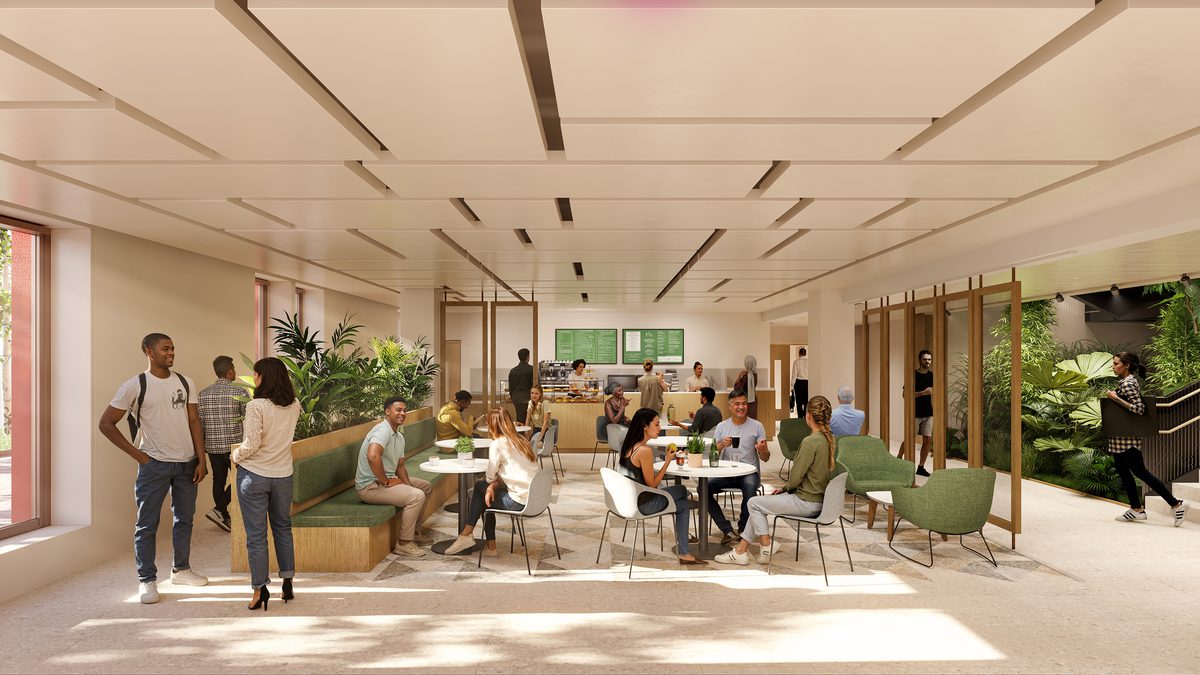
- Nature-inspired, muted colour palette that avoids sensory overload
- Tactile natural materials such as timber that create warmth and grounding
- Soft acoustics to support focus and reduce stress
- Micro-settings for privacy, one-to-one support, group work or quiet study
- Universal design elements like grab rails and intuitive signage that support both trauma-affected users and neurodivergent learners
Landscape design
- Safe, clearly defined external routes
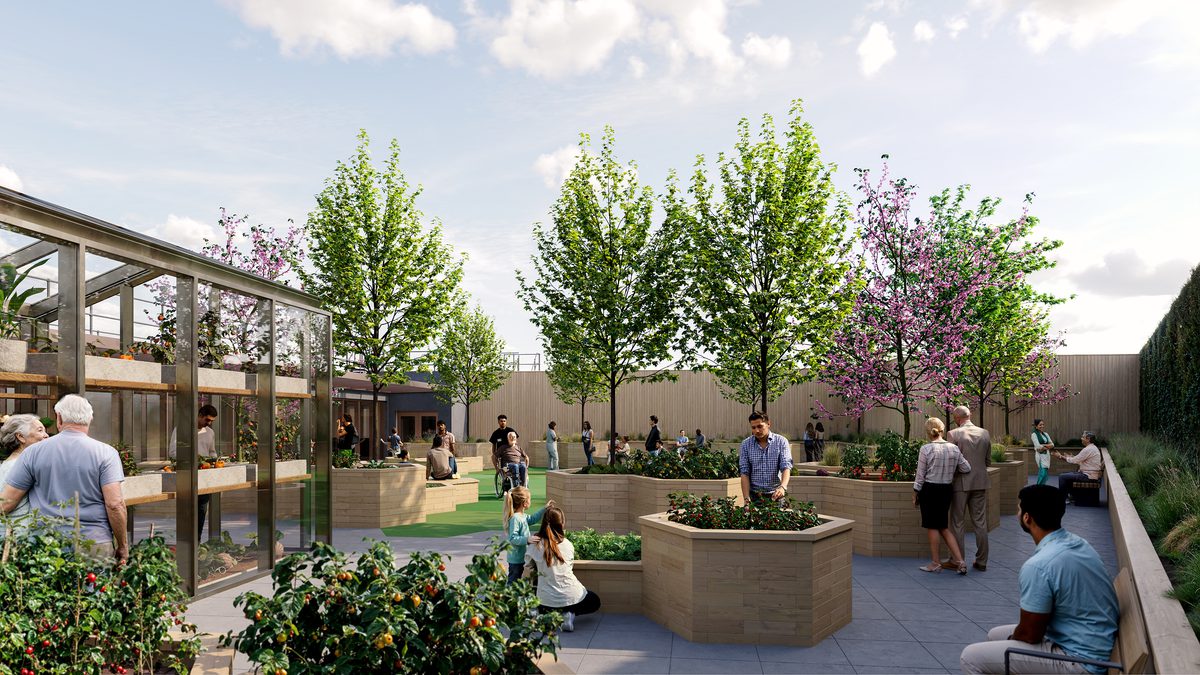
- Planted terraces and green edges that help regulate emotions
- Shaded external learning and breakout zones
- Places of refuge, offering moments of quiet before entering the building
- Biophilic design to connect students and staff with nature throughout their day


Embedding wellbeing: what WELL Gold means for Salford
At the Thrive Health and Wellbeing Centre, the decision to pursue WELL Gold certification wasn’t about chasing a label, it was about placing human wellbeing at the heart of the design.
The WELL Standard is a rigorous, science-based standard that evaluates how a building impacts the health, comfort and experience of its occupants. Whereas most building standards focus on energy and efficiency, WELL focuses on people.
For the Salford project, WELL Gold has shaped decisions across the entire building:
- Air Quality
Ultra-low VOC materials, high-performance filtration and careful ventilation strategies ensure clean, healthy air - critical when supporting healthcare, therapy and teaching activities. - Light
Daylight access has been maximised for every user group, supporting circadian health, concentration and overall mental wellbeing. Artificial lighting is tuned to avoid glare, harsh contrasts or overstimulation. - Thermal and acoustic comfort
The building is designed to avoid drafts, hotspots and echo - all potential stressors. Acoustic zoning protects quiet study areas, therapy rooms and spaces where confidentiality matters. - Material health
Natural, non-toxic, biophilic materials were selected to support both emotional comfort and physical wellbeing. Timber is used strategically to create grounding and warmth. - Mind and movement
The WELL Standard encourages designers to create environments that support calmness, rest, movement and social interaction. This aligns directly with trauma-informed design, where giving occupants choice in how they move, sit and gather is essential.
Integration with TID
What’s powerful is how The WELL Standard and trauma-informed design reinforce each other.
- WELL provides measurable metrics for comfort, light, materials and air.
- TID provides the emotional and psychological lens, ensuring those metrics translate into real human benefit.
Together, they’ve allowed us to create a building that is both clinically high-performing and emotionally intelligent - a place where students, educators and healthcare professionals can thrive.
What this means for students, staff and visitors
Even before opening, the design demonstrates clear benefits:
- Lower stress for students arriving on campus
- Enhanced concentration and comfort in teaching spaces
- More inclusive environments for neurodivergent learners
- Better support for student services, counselling and wellbeing teams
- Improved staff experience, morale and retention
- A learning environment that feels calm, human and supportive
This is not simply a ‘nice to have’. As universities and colleges face rising demand for mental health support, trauma-aware spatial design is becoming a critical part of the estates toolbox."
Lessons for estates leaders
From our work at Salford and across other wellbeing-led projects, several lessons are clear:
- Begin the briefing process with feelings, not functions
- Design inside and outside simultaneously
- Prioritise daylight, acoustics and material quality early
- Shift from ‘operational efficiency’ to ‘emotional experience’
- Embed TID as part of your design standards, not a bolt-on
- Measure wellbeing to prove impact (WELL, POE, biophilic KPIs etc.)
- Healthy buildings go beyond performance - they enable people to learn better, work better and feel safe.
Closing reflection
Trauma-informed design is reshaping the conversation about what healthy learning environments can be. At AHR, we’re committed to applying these principles across education, healthcare and civic buildings, ensuring that spaces don’t just meet technical performance standards, they support dignity, belonging and long-term wellbeing.
The University of Salford’s Thrive Health and Wellbeing Centre demonstrates what’s possible when we design with empathy, evidence and intention. I’m looking forward to continuing this work and sharing more as the sector increasingly embraces trauma-informed approaches.
If you’d like to discuss how trauma-informed design, WELL, biophilic design or inclusive education environments can support your estates strategy, I’d be glad to talk.
Frequently asked questions
Trauma-informed design is an approach that creates buildings and spaces that feel safe, predictable and emotionally supportive. It draws on trauma-informed care principles and applies them to architecture, interiors and landscape design. TID reduces sensory stress, improves navigation and helps users feel more in control of their environment.
Students and staff bring a wide range of lived experiences into learning environments. Trauma-informed spaces support concentration, reduce anxiety and help learners feel more secure. They benefit everyone, including neurodivergent users, students under stress and those transitioning between unfamiliar environments.
AHR embeds TID across architecture, interior design and landscape design. This includes:
- Legible layouts and clear wayfinding
- Soft acoustics and low-glare lighting
- Warm, nature-based materials
- Multiple seating and micro-settings for user choice
- Spaces that balance openness with refuge
- Landscapes that encourage calm, connection and movement
Our work on the University of Salford Thrive Health & Wellbeing Centre is a leading example of TID applied across an entire university building.
The WELL Building Standard is a global rating system that measures how buildings support human health and wellbeing. It assesses factors including air quality, light, acoustics, materials, thermal comfort and mental wellbeing. WELL Gold represents a high level of performance across these categories. https://www.wellcertified.com/
WELL provides science-based targets for comfort and wellbeing. Trauma-informed design adds psychological and emotional considerations. Together, they ensure that spaces are both physically healthy and emotionally supportive.
Using both frameworks ensures the building supports whole-person wellbeing - physical, emotional and cognitive. This is particularly important in a facility combining healthcare, teaching and wellbeing services.
TID works across all sectors, including:
- Schools, colleges and universities
- Healthcare and diagnostics
- Community and civic buildings
- Housing and supported living
- Workplaces and public sector estates
Any space where people need to learn, receive care, collaborate or feel safe.
Biophilic design reconnects people with nature through daylight, natural materials, planting, views and tactile textures. These elements reduce stress, improve mood and enhance cognitive function. Biophilia is used throughout AHR’s education and healthcare projects.
We have delivered award winning healthy buildings across the UK, including:
- Thrive Health & Wellbeing Centre, University of Salford
- National Health Innovation Campus (WELL Platinum buildings)
- Woodmill and St Columba’s RC High School (largest certified Passivhaus education building in the UK)
- Hundreds of schools, colleges and campus projects over several decades
We combine architecture, interior design, landscape, building consultancy and sustainability expertise to create emotionally intelligent learning environments.
AHR provides:
- Early-stage brief development
- Trauma-informed design reviews
- WELL and biophilia consultation
- Masterplanning and campus strategies
Posted on:
Nov 26th 2025
Topics:
Share on
Related Projects

Thrive Health and Wellbeing Centre, School of Health and Society
Designed to transform healthcare accessibility and education, the new centre is one of the first in the UK to use 'trauma informed design' throughout.

Daphne Steele Building
WELL Platinum certified university building setting new standards in wellbeing, sustainability and low-carbon design in higher education.

Woodmill and St Columba's RC High School
Inspiring better learning and nurturing future talent in the largest Passivhaus-certified education building in the world.