
Thought Leadership
Designing for defence communities: the people behind the mission

by Stuart Bryson
Regional Director, Architecture
Defence investment is often discussed in terms of capability, technology and operational effectiveness. These things matter, but behind every operational capability are people. And people do not only exist within the perimeter of a defence site.
They live in communities, in housing, in neighbourhoods. They send their children to local schools, use local healthcare facilities and depend on local transport. Their families build lives in the towns and places where defence investment brings them.
As the scale of defence investment increases and the Defence Growth Deals begin to reshape communities around major defence industrial locations, the built environment professions have a responsibility that extends well beyond the factory fence or the base perimeter. Designing well for defence means designing well for the communities that grow up around it.
When defence investment arrives at scale
Barrow-in-Furness is the most vivid current example of what happens when defence investment arrives at significant scale in a community.
The submarine programme is driving workforce expansion at BAE Systems on a scale that the town has not seen for generations. Thousands of additional skilled workers will be needed over the coming decade. Many of them will come from outside the town, bringing families, housing needs, school places, healthcare demand and pressure on transport infrastructure.
The town’s existing infrastructure was not designed for this. Housing supply is constrained. School capacity is under pressure. Transport connections, particularly rail links to the rest of the country, are inadequate for the scale of workforce that the programme requires. Healthcare provision is already stretched.
These are not peripheral concerns. They are central to whether the submarine programme can attract and retain the workforce it needs. If Barrow cannot provide the quality of life that skilled workers and their families expect, the programme’s workforce ambitions will be harder to realise. The quality of the community is inseparable from the operational success of the programme it hosts.
Similar dynamics, at different scales, apply across other Defence Growth Deal locations. Communities around HMNB Devonport, the Clyde naval base and defence technology clusters in the East of England will all face versions of the same challenge as investment flows.
Housing and community infrastructure
The most immediate pressure that defence workforce expansion creates is for housing. In communities like Barrow where housing supply has historically been relatively limited, rapid workforce growth can drive price increases that price out existing residents and create affordability challenges for incoming workers on lower pay grades.
Addressing this requires proactive planning for housing growth that anticipates demand rather than reacting to it. This means masterplanning at the community scale, working with local authorities, development partners and defence employers to understand the scale and timing of workforce growth and to plan housing delivery accordingly.
Design quality matters as much as quantity. Housing that is well-designed, well-located in relation to employment, schools and services, and well-integrated with existing communities creates places that people want to live in.
Poorly designed housing delivered rapidly in response to demand pressure creates problems that persist long after the initial investment has passed.
Schools, healthcare facilities, community centres, sports and leisure provision and green spaces all follow workforce growth. Planning for this community infrastructure in coordination with defence industrial investment, rather than allowing it to lag behind, is both more efficient and more effective in creating communities that function well.
Designing for military personnel and their families
Within the defence estate, the wellbeing of military personnel and their families is increasingly recognised as central to operational effectiveness. The Defence Housing Strategy, published in November 2025, commits £9.2 billion to improving more than 40,000 service family homes, reflecting a growing understanding that poor living environments are a direct driver of retention challenges.
The evidence is clear. In 2024, 36% of tri-service personnel reported dissatisfaction with the quality of their Defence family home. Nearly two-thirds cited the impact of service life on family and personal life as a reason influencing their decision to leave. These are not abstract statistics. They represent real people making decisions about whether to stay in service based, in part, on how their families are living.
But accommodation is only one dimension of the lived experience of military personnel and their families. The government’s commitment reaches beyond service family homes too. A new independent review of Single Living Accommodation (SLA), launched in January 2026, is examining conditions for around 80,000 single and unaccompanied personnel in the UK and overseas. Together, these two programmes represent the most significant commitment to defence accommodation in over 50 years.
Service family housing, the schools their children attend, the healthcare facilities they rely on and the community environments they inhabit all contribute to whether a posting is experienced as an opportunity or a hardship.
This is particularly significant for families who move frequently, following posting cycles that can see them relocate every two to three years. The Defence Housing Strategy’s ‘Forces First’ approach, including 64 new housing zones designed to reduce unnecessary moves, recognises that stability matters as much as quality. The quality of the community environment at each posting location directly affects family wellbeing and, through that, the decision of personnel to remain in service.
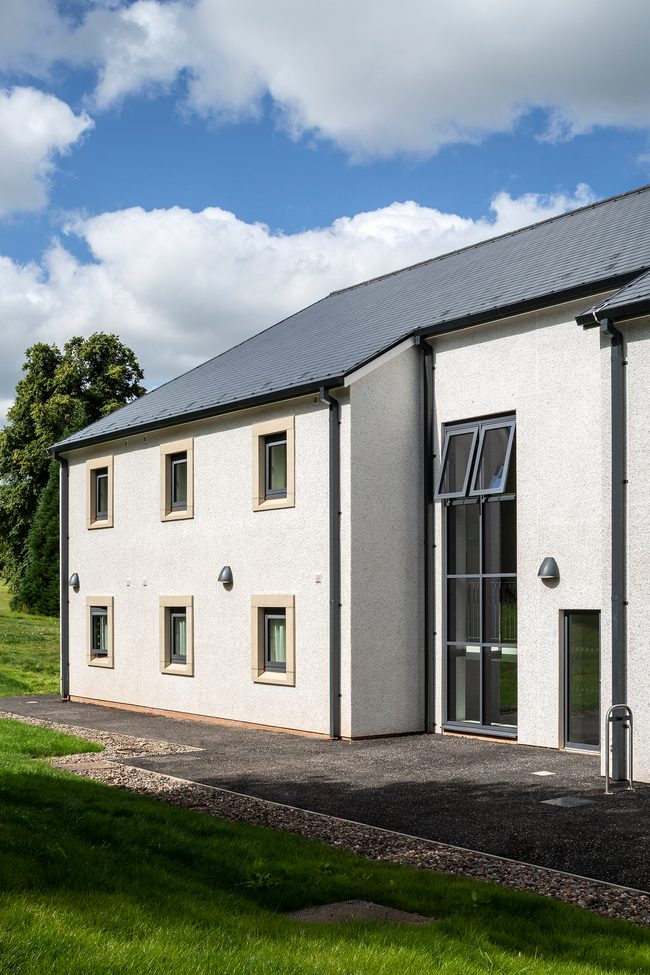
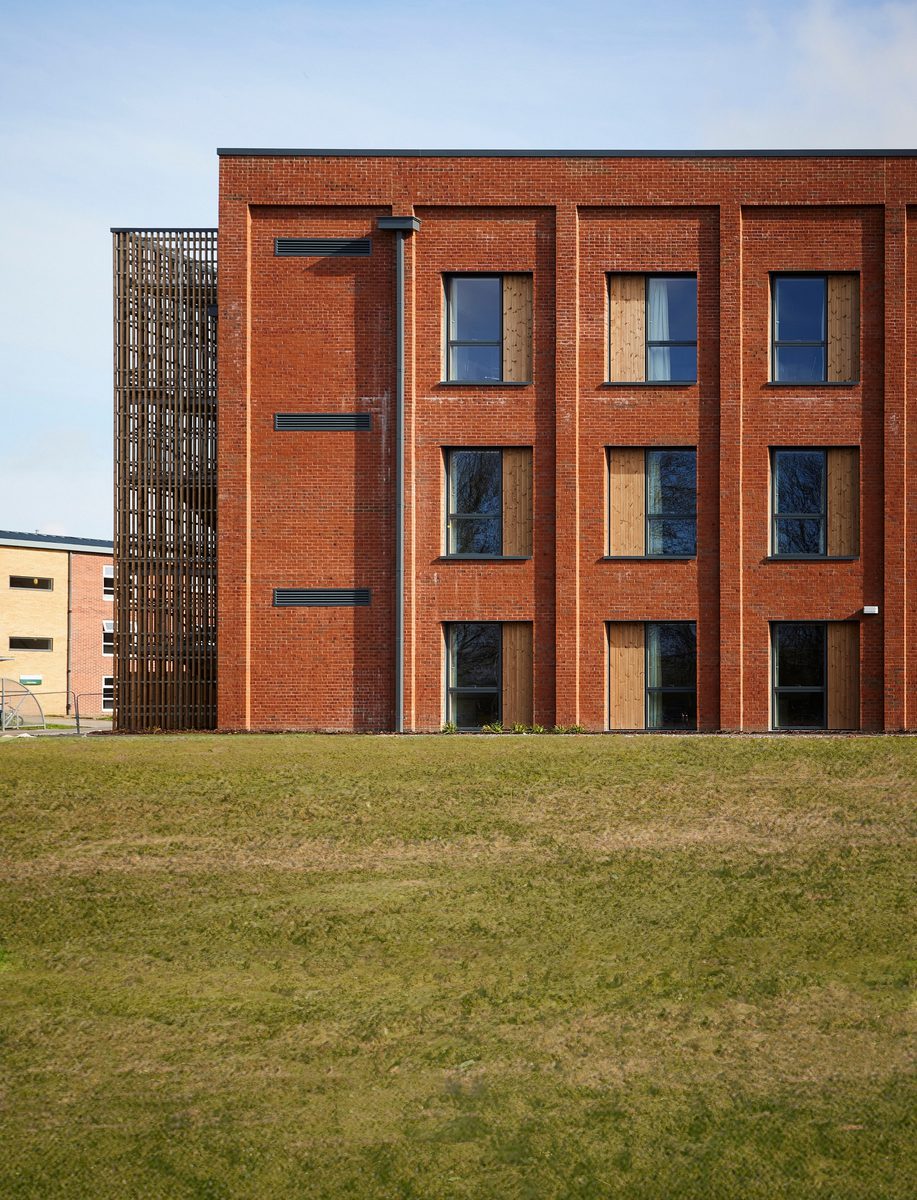
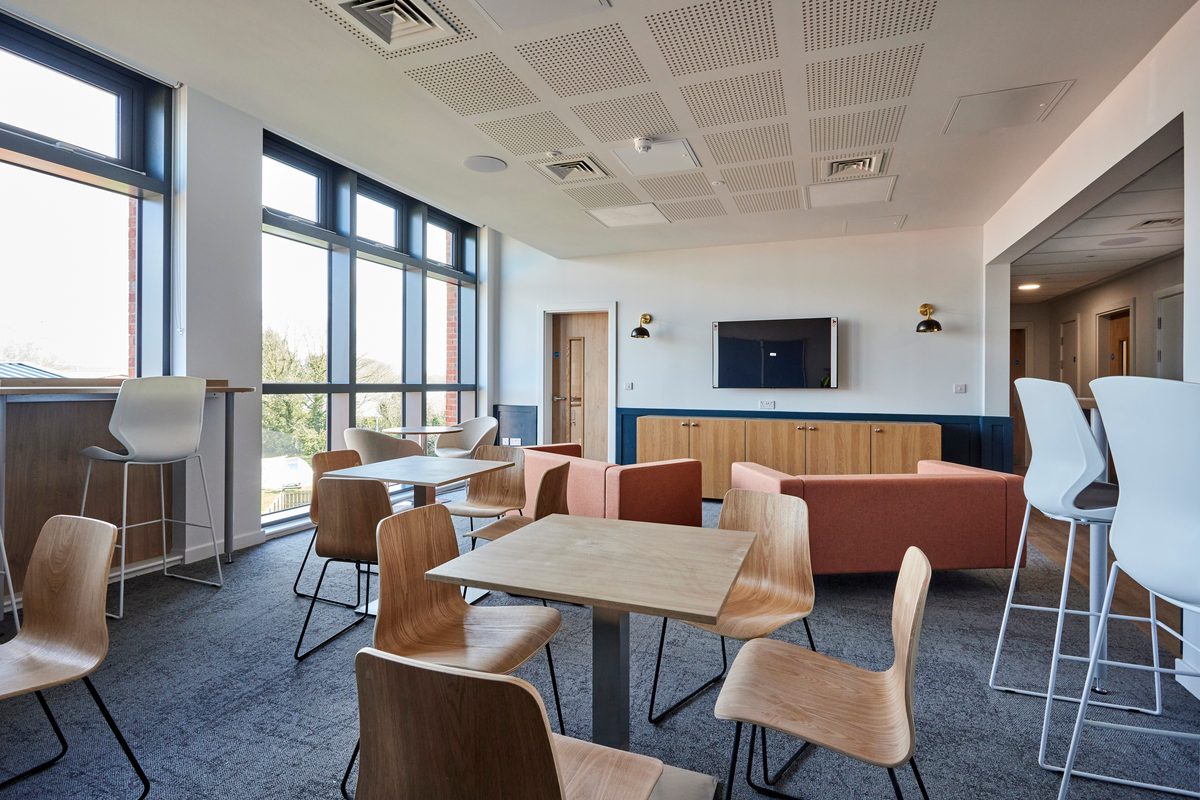
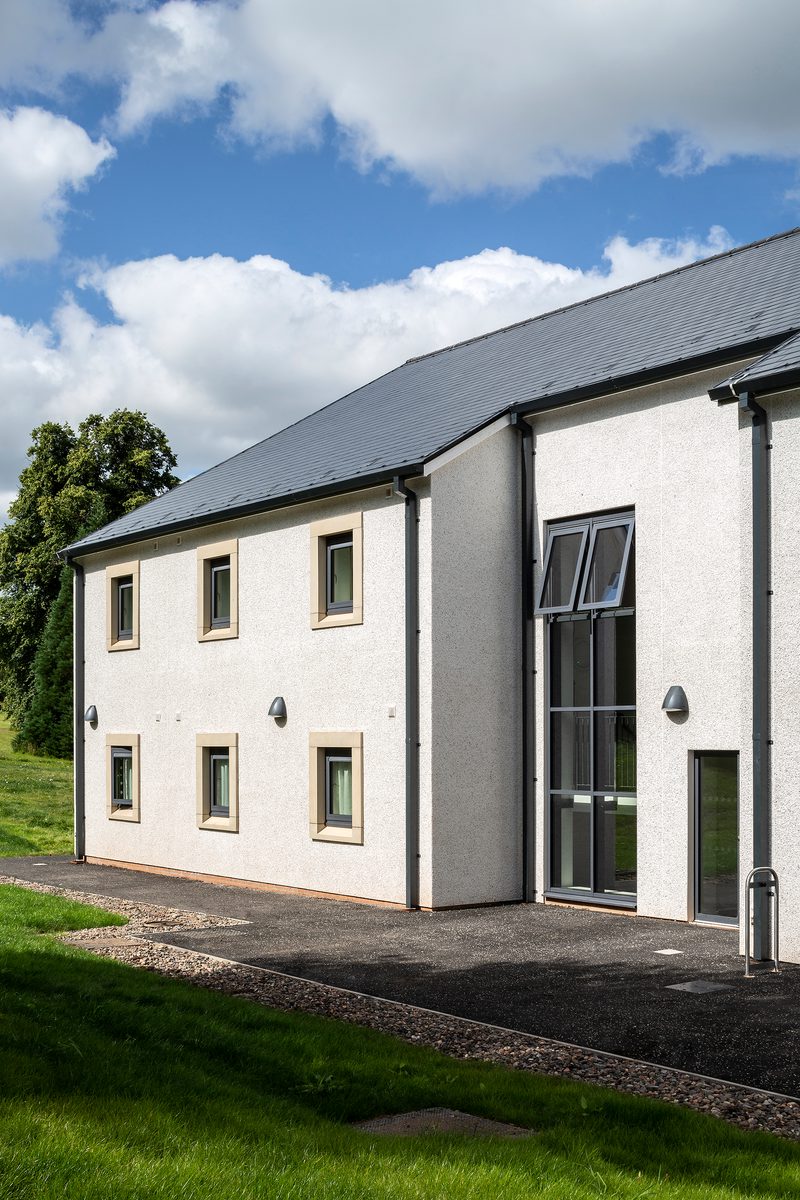
Our experience designing both military accommodation and community facilities across a range of scales and contexts informs how we approach this challenge. Good design in this context is about more than individual buildings. It is about creating coherent, well-functioning environments where people can build a life, however temporarily, and feel supported in doing so.


Social value and the built environment
The social value agenda in public sector construction is growing in significance. Procurement frameworks increasingly require design and construction teams to demonstrate the social value their programmes will deliver, in terms of local employment, skills development, supply chain investment and community benefit.
In a defence context, the social value opportunity is substantial. The new Defence Housing Service, being established through the Armed Forces Bill, will drive development on surplus defence land with the potential to deliver over 100,000 new homes for both military and civilian families. Construction programmes on this scale generate significant employment across a range of skill levels and trades, with dedicated opportunities for service leavers and veterans embedded within the programme from the outset.
Design plays a role here too. Buildings and places that are designed to support community use, that create employment and training opportunities through their ongoing operation, and that contribute positively to the public realm of the communities they sit within generate social value that extends well beyond the construction phase.
The responsibility of the built environment professions
There is a temptation in defence work to focus exclusively on the project brief: the building, the site, the client’s specific requirements. This is understandable. The project is where the commission is and where the professional responsibility lies.
But the built environment professions have a wider responsibility than any individual project. The cumulative effect of design decisions across a community, across a defence industrial cluster, across a town that is being reshaped by major investment, is a built environment that either supports or undermines the wellbeing of the people who live and work within it.
As defence investment grows and the Defence Growth Deals begin to reshape communities across the UK, the opportunity to get this right, to design not just for operational effectiveness but for genuine community benefit, is significant. It requires thinking at a larger scale than individual projects and a longer timeframe than individual programmes. It requires the kind of integrated, multi-disciplinary capability that combines masterplanning, architecture, landscape and community-focused design.
The mission of defence is ultimately about people: the personnel who serve, the families who support them and the communities that host them. Designing well for defence means designing well for all of them.
Frequently asked questions
We bring a breadth of experience across both the defence estate and the civilian environments that support it. This includes the design of military accommodation, training and operational facilities, as well as housing, education, healthcare and community infrastructure in places shaped by defence investment. Working across these interconnected sectors allows AHR to understand the full lifecycle of defence communities, from on-base living and working environments to the towns and cities that sustain them, enabling a more integrated, place-led approach to design that supports both operational needs and long-term community wellbeing.
Because operational capability depends on people. If housing, schools, healthcare and transport don’t support them, recruitment and retention suffer.
Rapid workforce expansion puts pressure on housing supply, school places, healthcare services and transport infrastructure, often beyond current capacity.
Through proactive, large-scale masterplanning that aligns housing delivery with workforce growth, ensuring affordability, quality and integration with services.
Well-designed homes and community infrastructure improve quality of life, reduce disruption from relocations and directly influence personnel retention.
It generates jobs, skills and long-term community benefits, especially when developments include accessible public spaces and support local economies.
Share on
Related Projects

Kinloss Barracks
We delivered two modular junior ranks SLA blocks designed to Passivhaus principles, replacing older accommodation and improving comfort and wellbeing.

Stafford Barracks
We shaped a modular single living accommodation (SLA) building designed to Passivhaus principles, providing high quality bedrooms and communal space aligned with MoD guidance.

UK Hydrographic Office
Winner of the British Council for Office’s Best of the Best Workplace, this transformational workplace encourages new ways of collaborative working.
Related News
Security, resilience and wellbeing: designing defence facilities that perform
Thought Leadership
16 Apr 26

Designing accommodation where military personnel can live and perform at their best
Thought Leadership
1 Mar 26
Green by design: why sustainability and national security are not in conflict
Thought Leadership
12 Jan 26