Thought Leadership
Net zero and the future learning estate: Embedding GenZero principles through CF25 delivery

by AHR

England's schools are entering a new phase of development. The Department for Education (DfE) launched Construction Framework 25 (CF25) in January 2026. It expects safety, condition, carbon performance and long-term value to be addressed together, at scale.
For contractors, local authority education teams, academy trusts and consultant partners now working within CF25, net zero has moved from aspiration to everyday reality for school design.
It is part of the live delivery environment, shaping specifications, tender evaluation and how schools are expected to perform in use.
For pupils, teachers and communities who rely on these buildings every day, this matters. Schools designed and built well support learning, wellbeing and inclusion for decades."
Imran Kassim
Director, ArchitectureWhy net zero is now a delivery issue, not a design aspiration
Rising energy costs, increasing scrutiny of school conditions and national climate commitments have fundamentally changed the risk profile of education buildings. Schools are long-life assets. We know inefficient buildings place long-term pressure on budgets and facilities teams
Clients are now asking a more difficult question. Can this building be operated and adapted over 30 to 60 years? Can it be progressively decarbonised, not just delivered on time and budget?
This shift sits behind the direction taken by the Department for Education, through the School Rebuilding Programme and the live CF25 framework, where sustainability, whole-life value, digital capability and collaboration are now embedded expectations rather than optional extras.
What GenZero has demonstrated in practice
The GenZero Schools programme has been instrumental in testing how ultra-low-carbon schools can be delivered within the realities of public procurement, standardisation and cost control.
We are currently delivering two of the five GenZero pilot projects for the Department for Education, Wellfield Academy and Woodside Primary School, working directly with the constraints that contractors and consultant teams now recognise as typical: tight programmes, fixed value bands, complex sites and the need for repeatable solutions.
 Wellfield Academy, Leyland
The key lesson emerging is not about technology, but about alignment. Net zero performance depends on:
- compact, fabric-first building forms
- clear strategies for daylight, ventilation and overheating control
- simple, robust servicing solutions that facilities teams can operate
- layouts that reflect how schools are actually used, not theoretical occupancy
When these fundamentals are coordinated from the outset, carbon performance supports, rather than competes with, educational quality and inclusion.
Our task under CF25 is to bridge the gap between ambitious environmental targets and the practical, everyday needs of teachers and pupils. By embedding GenZero principles into the framework delivery, we're creating healthier, more inspiring environments that will support learning for generations."
Gary Overton
Director and Head of EducationPerformance evidence and closing the gap
As expectations increase, so does the need for credible performance evidence. Our contribution to the pilot testing programme supporting the development of the UK Net Zero Carbon Building Standard, using real data from Woodmill and St Columba’s RC High School (WSC), has reinforced a critical message for English delivery teams.


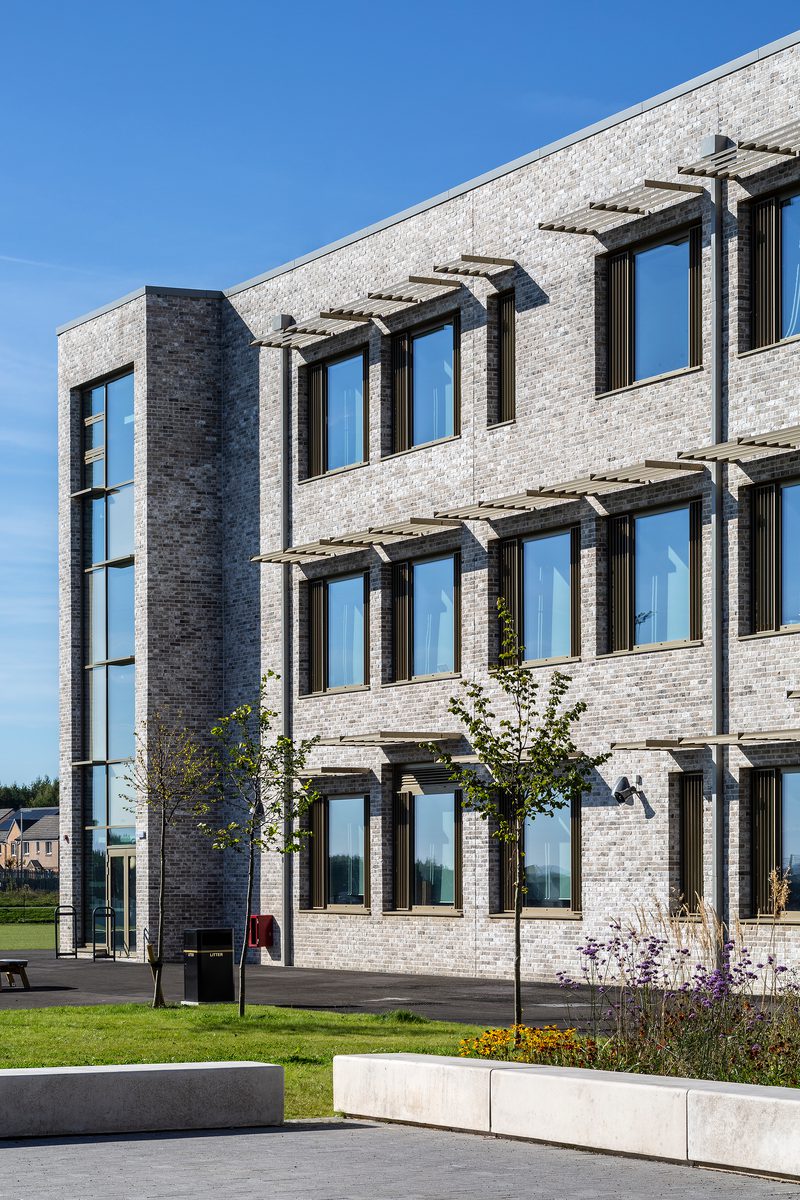
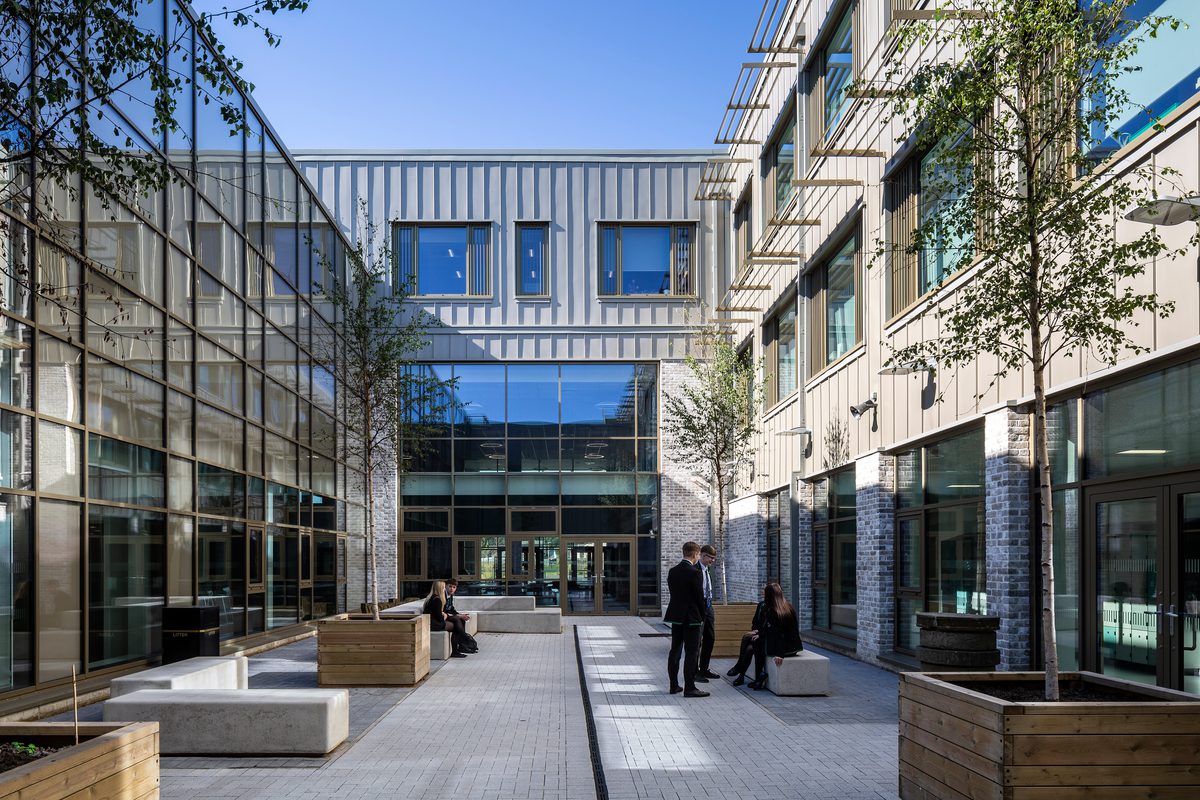
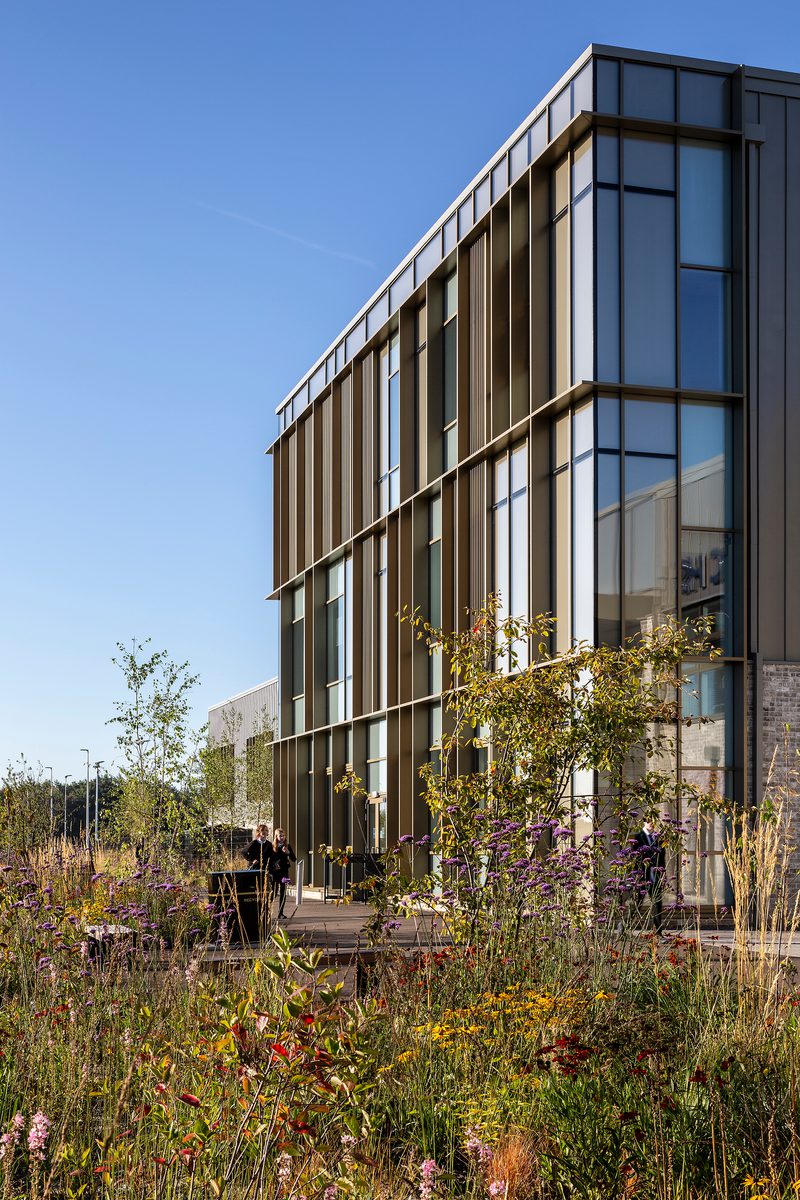
While WSC is a Scottish project and the world’s largest Passivhaus certified education building, its relevance lies in what it reveals about performance risk: predicted outcomes only translate into reality when design intent, construction quality, commissioning and operation are aligned.
For contractors operating under CF25, this elevates the importance of build quality, testing, commissioning and soft landings - not simply achieving compliance at handover.
CF25: Raising expectations across the delivery chain
Now live, CF25 is the primary route to market for major education capital works across England. Its structure places increased emphasis on:
- early contractor involvement
- collaboration between client, consultant and contractor teams
- sustainability and whole-life value
- digital information management
- demonstrable continuous improvement and social value
For contractors, this represents a shift away from transactional delivery towards partnership-led outcomes. For consultant teams, it reinforces the need to integrate surveying, feasibility, design and delivery advice - particularly where condition, safeguarding, planning and decarbonisation pressures intersect.
Whole-life value beyond capital cost
Net-zero-aligned schools often challenge traditional cost-led thinking. Higher-performing envelopes and simpler systems can increase initial capital spend, but typically reduce operational cost, maintenance risk and future retrofit burden.
Whole-life modelling over extended periods allows clients and delivery teams to make informed trade-offs, particularly where projects must remain affordable long after capital funding has been spent. Under CF25, this longer-term view is increasingly shaping decision-making.
Retrofit, extension and estate-wide thinking
New build alone will not address England’s estate challenges. Many schools are structurally sound but poorly performing, with layouts that no longer support contemporary teaching or inclusion.
Our work on projects such as Leeds Maths School demonstrates how refurbishment, remodelling and targeted extension can transform learning environments while managing carbon, cost and disruption. The principles of phased delivery, adaptable space, clear circulation and improved environmental performance are key.
 Leeds Maths School
Inclusion, safety and operational clarity
Net zero must work alongside safeguarding, SEND provision and everyday school operation. Over-engineered buildings that perform well in energy models but struggle to support calm circulation, supervision or inclusive use undermine educational outcomes.
At Willows High School, we acted as technical advisor, leading the multidisciplinary team in establishing design principles for a relocated secondary school with a co-located Special Resource Base. The project demonstrates how inclusive provision, operational clarity and long-term adaptability can be planned together - lessons that resonate strongly with English delivery teams navigating CF25 requirements.
Data, digital and landscape as enablers
Reliable data underpins effective decision-making. Accurate surveys, geomatic information and digital models support better early options appraisal, reduce risk and enable more predictable outcomes.
Landscape design has evolved from a secondary amenity into a central pillar of school infrastructure, essential for both pedagogical success and climate resilience. Beyond providing optimum learning spaces and increased wellbeing, landscape now functions as vital climate infrastructure.
By integrating shading, sustainable drainage and biodiversity, these spaces and their visual connection to the interior move beyond aesthetics to provide the comfort and resilience necessary as climate conditions become more extreme.
From pilot learning to everyday delivery
GenZero has shown what is possible. CF25 now provides the mechanism to make those lessons routine.
For contractors, local authorities, academies and consultant teams, the challenge is no longer whether net zero can be achieved, but how consistently it can be delivered - across new build, refurbishment and extension projects, and across thousands of schools.
When carbon performance, inclusion, safety and operational reality are addressed together, the learning estate can move beyond recovery and towards a new, more resilient normal.
Whether you’re planning a new build, refurbishment or estate improvements, we’d welcome a conversation. Get in touch
Frequently asked questions
CF25 is the Department for Education's primary procurement route for major school building projects across England. Launched in January 2026, the framework emphasises collaboration, sustainability, whole-life value and digital information management. We work within CF25 to deliver energy-efficient schools that perform well for decades.
We focus on fabric-first sustainable school design, combining high-performance building envelopes with simple, robust systems. Our work on GenZero schools like Wellfield Academy demonstrates how low-carbon design supports learning environments, reduces running costs and delivers long-term value within tight public sector budgets.
Yes. Many schools are structurally sound but poorly performing. We've successfully delivered school refurbishment projects that transform energy efficiency, improve teaching spaces and support SEND provision. Sensitive retrofit can reduce whole-life carbon while managing cost and disruption to school communities.
Net zero must work alongside safeguarding, SEND provision and everyday school life. We integrate inclusive design from the outset, ensuring circulation, supervision and adaptable learning spaces support all students. Our work at Willows High School shows how technical performance and educational quality strengthen each other when planned together.
Posted on:
Feb 19th 2026
Topics:
Share on
Related Articles

Project News
Planning approved for Wellfield Academy, one of five GenZero national pathfinder schools
We're delighted that planning approval has been granted for the redevelopment of Wellfield Academy in Leyland, one of five GenZero national pathfinder schools.
Date: 6 Jan 26
by AHR

Project News
An exciting milestone reached as the redevelopment of Upton-by-Chester High School begins
Due to complete in 2028, the new secondary school will provide a high-quality, inclusive learning environment for 1,845 students.
Date: 5 Jan 26
by AHR

Awards
Celebrating our shortlisting as Architectural Practice of the Year at the Education Property Awards 2026
We are delighted to have been shortlisted as Architectural Practice of Year Finalists at the Education Property Awards 2026.
Date: 19 Dec 25
by AHR

Awards
We won Architect of the Year at this year's Learning Places Scotland Awards
We're delighted to have been named Architect of the Year at the Learning Places Scotland Awards, recognising our commitment to sustainable, Passivhaus-led innovation in future-ready education design.
Date: 19 Nov 25