Thought Leadership
Lessons from testing the UK Net Zero Carbon Buildings Standard

by Jamie Gregory
Associate Director, Architecture
People do not ask us for a ‘net zero carbon’ badge, they ask for schools, workplaces and community buildings that feel good to be in. They want spaces that stay comfortable in a heatwave, run reliably in winter and do not surprise them with energy bills.
That is why the UK Net Zero Carbon Buildings Standard (UKNZCBS) Version 1 launch matters. It moves net zero from a broad ambition into something we can align around, measure with confidence and deliver consistently.
For years, ‘net zero’ has meant different things to different teams. Some focused mainly on operational energy, others leaned more heavily on offsets and many measured carbon in slightly different ways, which made comparisons difficult and decisions harder than they needed to be. The new UKNZCBS brings the industry closer to shared definitions and comparable outcomes, while still leaving space for practical, project-led judgement.
Why this launch matters now
Ambition is not the issue anymore, delivery is, especially when budgets are tight, programmes are compressed and expectations around climate responsibility keep rising.
At the same time, clients are rightly asking for more than carbon compliance. They want buildings that support wellbeing, work reliably day to day and remain adaptable as needs change. The Standard helps because it provides clearer boundaries and a more consistent approach, so teams can spend less time debating definitions and more time making early choices that genuinely improve performance.
Our perspective: what we learned in the Pilot
We joined the UKNZCBS Pilot Testing Programme with our client Fife Council using live project data from Woodmill and St Columba’s RC High School. As the world’s largest Passivhaus certified education building, it gave the pilot a level of scale and credibility that really tested the Standard’s practicality.
Pilot testing was hands-on. We applied the Standard to real project information, worked through the reporting steps and pressure-tested the evidence trail, looking closely at where the process was smooth and where teams might need clearer guidance. That mattered because compliance only helps if it fits the way projects are actually delivered, with real-world handovers, competing priorities and multiple collaborators.
The pilot engaged 205 projects across 13 building types and UK regions, with feedback gathered through webinars, surveys and forums, which helped shape the Standard around practical application in a real setting.
woodmill and st columba's rc high school


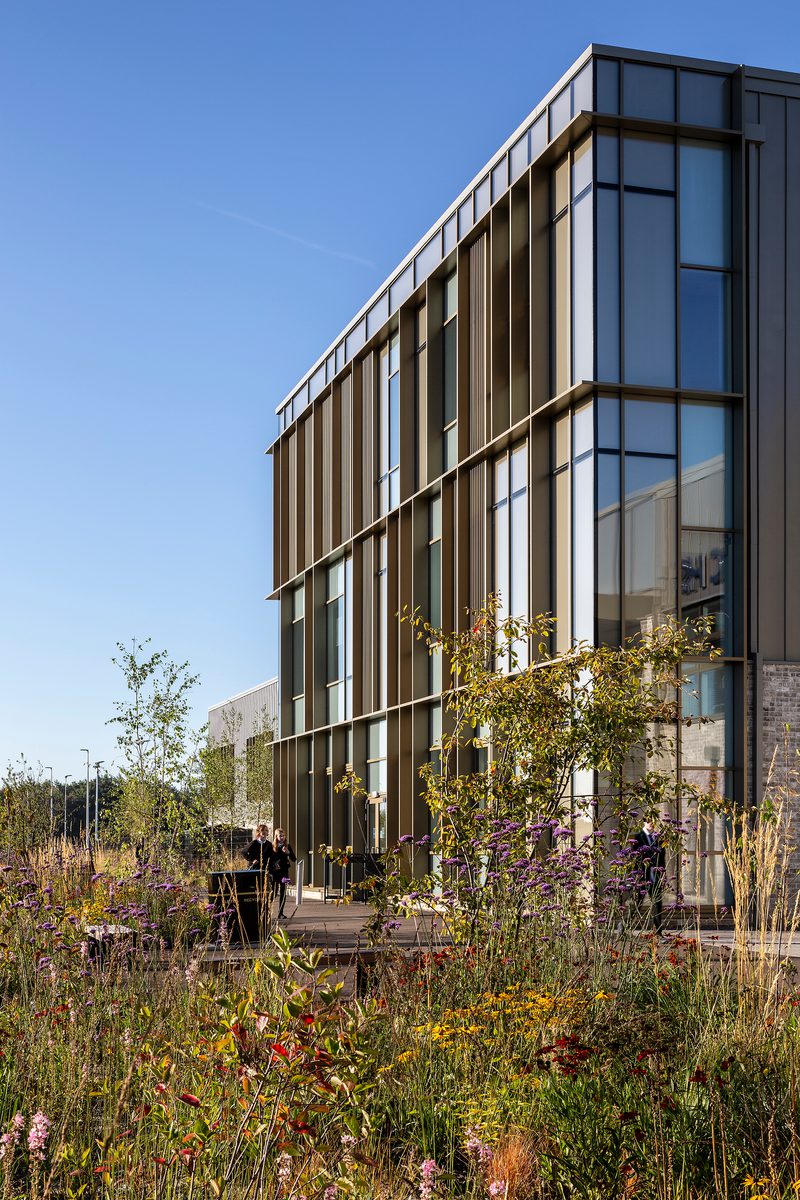
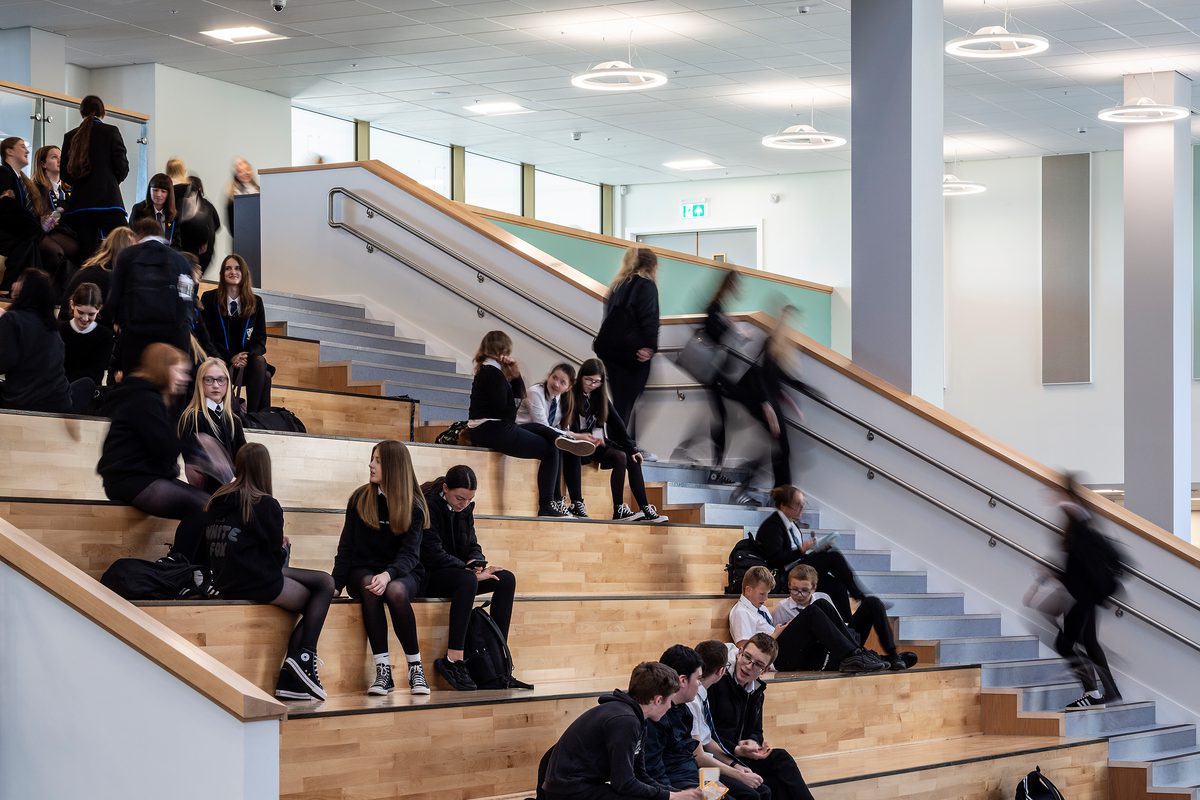
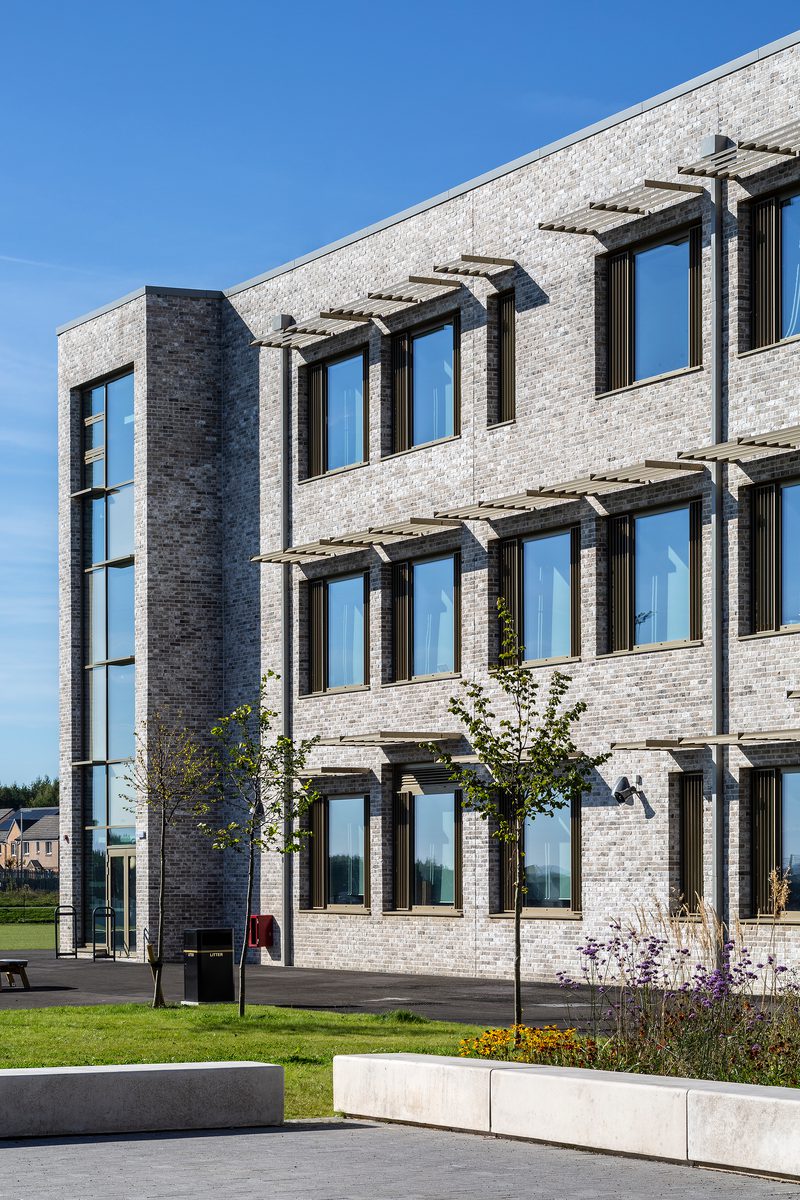
One of the Standard’s most important contributions is consistency. It sets out clear expectations around what should be measured, what falls within scope and how outcomes should be evidenced. While that may sound procedural, it has a practical impact: it makes the target clearer and the pathway to achieving it more transparent.
A central part of this is the Standard’s focus on whole-life carbon. Rather than separating different impacts, it considers the combined emissions associated with both the construction of a building and its performance in use. This includes:
- Carbon from construction – the emissions associated with materials, products and the delivery of the building
- Carbon from energy in use – the emissions linked to the energy the building requires throughout its operational life
In practice, project teams often encounter difficulties when boundaries are open to interpretation or when carbon reporting becomes a late-stage exercise. The Standard addresses this by introducing clearer templates, more consistent reporting requirements and a stronger approach to assurance, informed by lessons from projects across a wide range of building types.
If there is one point worth underlining, it is this: the best outcomes come from early design choices. Late-stage fixes tend to cost more, disrupt programmes and deliver less than everyone hoped.
What Woodmill and St Columba’s RC High School taught us
Working through the Standard using Woodmill and St Columba’s RC High School data sharpened a few lessons we already believed in, while also highlighting where good foundations make the Standard easier to meet.
One aspect that proved particularly relevant when applying the Standard to Woodmill and St Columba’s was that the building was designed and certified to the Passivhaus Classic standard. This aligned well with several of the Standard’s core components, particularly operational energy through energy use intensity (EUI) and water use. The embodied carbon budget set by Fife Council also supported compliance, helping guide the project towards the Standard from the outset.
Next steps
The Standard is here, which means there are a few sensible actions you can take immediately, even if a project is not yet on site.
- Set the net zero brief early and keep it measurable
- Agree scope, boundaries and reporting expectations at the start, then make sure the whole team is working to the same definition, including contractors and specialist designers.
- Build a whole-life carbon plan into programme and fees
- Decide who calculates, who checks and when key decisions happen, so carbon is not treated as an extra task squeezed into the margins.
- Design for performance, then prove it with a clear evidence trail
- Align energy strategy, fabric, services and controls, and keep documentation straightforward and consistent so performance is not only promised, but also demonstrated.
Consistency is the real step forward
For me, the Standard represents a shift from aspiration to consistency. It supports fairer comparison between projects and a clearer path to outcomes that stand up to scrutiny, which ultimately benefits the people who will live, learn and work in these buildings.
At AHR, our teams bring deep experience in delivering high-performance buildings, including Passivhaus design, whole-life carbon assessment and practical net zero strategies. We work closely with clients and project teams to translate standards and ambitions into clear, achievable decisions from the earliest stages of a project, helping ensure buildings perform as intended over the long term.
If you are exploring how the UK Net Zero Carbon Buildings Standard could shape your next project, our team can help you understand what it means in practice and how to align your brief, design and delivery approach with its requirements. Get in touch.
Learn more about the Standard here
Frequently asked questions
The UK Net Zero Carbon Buildings Standard (UKNZCBS) provides a consistent framework for defining, measuring and verifying net zero carbon buildings in the UK. It sets clear requirements for assessing whole-life carbon, including both operational energy emissions and embodied carbon from construction materials and processes. By establishing shared definitions and reporting expectations, the Standard helps project teams, clients and designers align around measurable outcomes rather than varying interpretations of 'net zero carbon' .
The UKNZCBS assesses whole-life carbon by considering two key sources of emissions across a building’s lifecycle. These include embodied carbon from construction, such as materials, products and the delivery of the building, and operational carbon, which relates to the energy required to run the building over time. By bringing these elements together, the Standard helps ensure net zero strategies address both the carbon impact of building construction and long-term building performance in use.
Passivhaus design can support compliance with the UK Net Zero Carbon Buildings Standard because it prioritises extremely low operational energy demand and measurable building performance. In the case of Woodmill and St Columba’s RC High School, Passivhaus principles aligned well with key UKNZCBS requirements such as energy use intensity (EUI) and efficient water use. When combined with a clear embodied carbon budget, Passivhaus buildings can provide a strong foundation for meeting whole-life carbon targets.
Early design decisions have the greatest influence on achieving net zero carbon buildings. Setting clear whole-life carbon targets, defining reporting boundaries and integrating carbon assessments into the design process from the outset helps avoid costly late-stage changes. The UK Net Zero Carbon Buildings Standard encourages teams to establish measurable carbon goals early, enabling architects, engineers and clients to make informed decisions that improve building performance and reduce both operational and embodied carbon emissions.
Posted on:
Mar 25th 2026
Topics:
Share on
Related Articles

Project News
Woodmill and St Columba's RC High School outperforms energy targets while delivering healthier learning environments
The world's largest Passivhaus certified education building is delivering exactly what we promised: A comfortable, healthy place to learn cutting energy bills and reducing energy consumption.
Date: 19 Feb 26
by Jamie Gregory
Associate Director, Architecture

Thought Leadership
Net zero and the future learning estate: Embedding GenZero principles through CF25 delivery
We explore how sustainable school design, CF25 delivery and GenZero principles are transforming England's learning estate for net zero carbon.
Date: 19 Feb 26

by AHR

Thought Leadership
Sustainable Communities for Learning: Building Wales’s next generation of schools
Gary Overton discusses how Wales’s Sustainable Communities for Learning programme is transforming education through long-term investment in net zero, inclusive and community-focused schools.
Date: 17 Feb 26

by Gary Overton
Director, Architecture

Thought Leadership
Scotland’s school estate: From recovery to reinvention
Exploring Scotland’s shift to outcome-led, LEIP-aligned schools, focusing on suitability, wellbeing, flexibility and Passivhaus performance beyond building condition.
Date: 13 Feb 26