Project News
GenZero and nature-based design in practice: Reflections from Education Estates 2025

by Imran Kassim
Director, Architecture
In October, I had the privilege of speaking at the Education Estates Conference in Manchester, sharing insights from our work on Wellfield Academy in Leyland, one of the UK’s first GenZero secondary schools.
Developed through the Department for Education’s (DfE) GenZero research project, led by Mott MacDonald, this programme is shaping the future of sustainable school design. It sets out how we can deliver buildings that are net zero carbon in operation, standardised for efficiency and deeply connected to nature, helping the UK meet its 2050 net zero targets while improving the wellbeing of students and staff.
At AHR, we’re proud to be designing two of the five GenZero pathfinder schools currently being delivered: Wellfield Academy in Leyland (secondary) and Woodside Primary School in Hertfordshire. My presentation focused on Wellfield - how the project takes GenZero’s principles from paper to practice and what we’ve learned about turning an ambitious research framework into a working, buildable and human-centred school.
From research to reality
The GenZero framework developed by Mott MacDonald establishes a platform-based design for manufacture and assembly (P-DfMA), essentially a “kit of parts” that allows schools to be built from standardised, prefabricated components. This modular, digital-first approach streamlines delivery, ensures quality and supports net zero operation through reduced waste and embodied carbon.
At Wellfield, we’ve applied this philosophy at every level. The building is set out on a 3.6m × 7.8m grid, enabling classrooms and ancillary spaces to be efficiently configured, reconfigured or expanded in the future. Using mass timber and panelised construction, a very high proportion of the building can be prefabricated, resulting in shorter construction programmes, improved thermal performance and significantly lower embodied carbon.
For me, this project represents far more than a single new building. It’s a glimpse into the next generation of sustainable education design, where modern methods of construction (MMC), low-carbon innovation and nature-based principles come together to create schools that are both environmentally responsible and inspiring to learn in.
Wellfield Academy: a model for sustainable secondary education
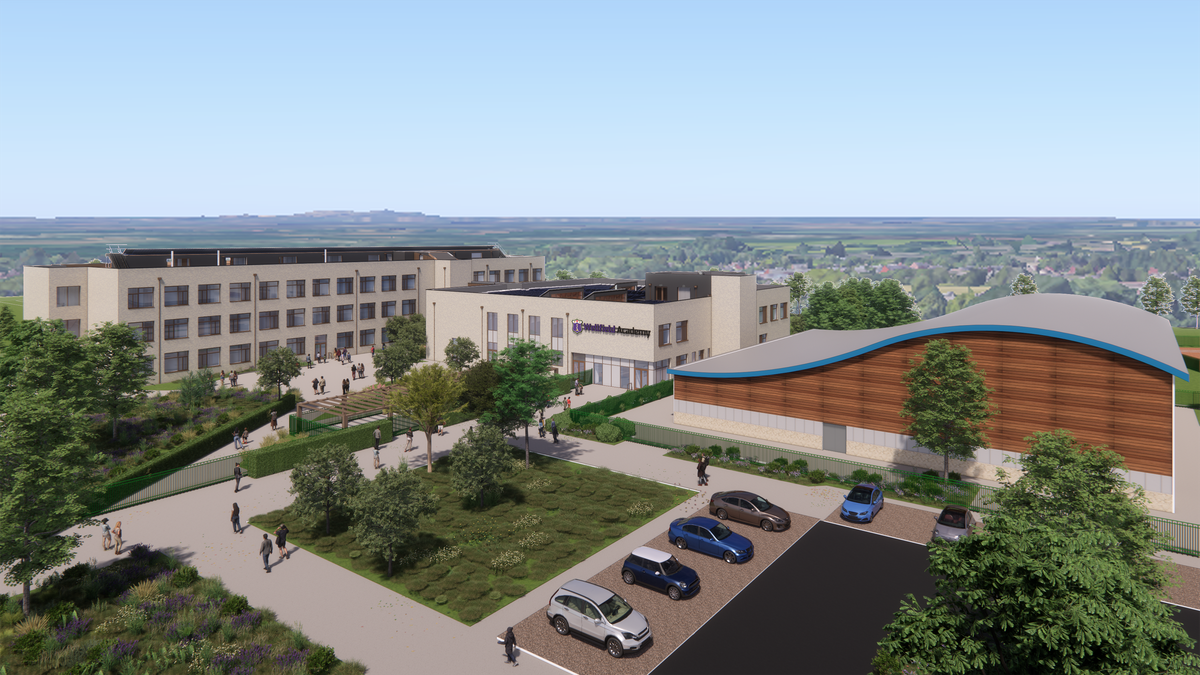
Wellfield Academy is designed for 830 pupils aged 11 to 16, and will become a national benchmark for secondary education aligned with the DfE’s net zero in operation and ultra-low embodied carbon targets.
Working in collaboration with Kier, we’re replacing the outdated school facilities that no longer supported modern learning or environmental standards. By embedding GenZero’s sustainable design principles, we’re achieving a step forward in both performance and experience:
- Fabric-first efficiency, delivering an airtightness target of 1.6 m³/h·m²
- Natural ventilation and daylight as the primary comfort strategy
- Smart controls and photovoltaic panels to manage and generate energy
- High insulation and low-VOC materials for healthy, durable interiors
- Timber structure acting as a carbon store, offsetting embodied emissions


Designed with nature
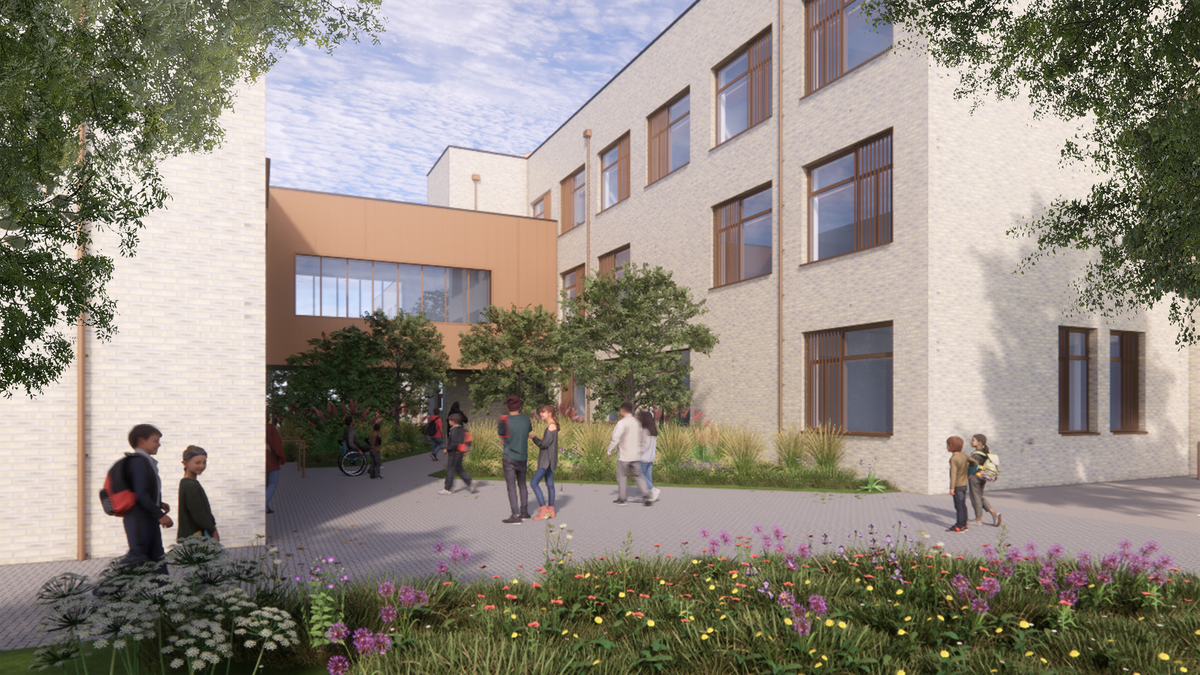
Nature-based design is intrinsic to the GenZero vision. At Wellfield, the landscape is treated as part of the learning environment, not a backdrop. Working alongside Ares Landscape Architects Ltd, we are creating engaging spaces for students to connect with nature, through tree planting, outdoor learning terraces and biodiverse courtyards, which also help regulate temperature and improve air quality.
Inside, we’ve applied biophilic design principles to bring the outdoors in. Tactile, natural materials and a muted colour palette create a calm, grounded atmosphere. Every classroom has access to daylight and views to greenery - helping reduce stress, improve concentration and promote wellbeing for both students and staff.
As a result, the building becomes a teaching tool in itself, supporting curriculum goals around sustainability, science and design technology.
Looking ahead
Delivering two of the DfE’s five GenZero pathfinder schools has given AHR the opportunity to test, refine and evolve the next generation of school design in practice. These projects are helping to shape new national guidance, proving that net zero, standardised and nature-connected schools can be beautiful, adaptable and affordable. Within the standardised framework, there’s flexibility to shape identity, respond to context and design spaces that feel local, grounded and personal.
More broadly, they continue AHR’s long history of leading innovation in education design. We’ve worked with the DfE and local authorities nationwide to deliver every type of school, across new build, refurbishment and estate transformation, supported by our multidisciplinary expertise in architecture, building consultancy, retrofit, interior design, landscape and geomatics.
Our portfolio includes the largest certified Passivhaus education building in the world – Woodmill and St Columba’s RC High School in Fife, alongside pioneering MMC schemes that have become models for efficient, sustainable design.
The GenZero pathfinders represent the next step in that journey. They’re not just schools of the future - they’re the foundation for a new era of education estates that are sustainable by default and human by design. And perhaps most importantly, we’ve seen how designing for carbon and designing for people are not separate things. The same strategies that cut energy use (daylighting, natural ventilation, good acoustics) also make schools healthier and more enjoyable places to learn and teach.
For me, the greatest success of the project is that it demonstrates how sustainability and wellbeing are inseparable.
A school that uses less energy is also one that feels better to be in, quieter, fresher, calmer, and more connected to nature."
Imran Kassim
Director, Architecture
To learn more about how AHR is delivering low-carbon, nature-led schools that inspire learning and wellbeing, or to discuss upcoming education projects, get in touch with our education team.
Posted on:
Oct 19th 2025
Topics:
Share on
Related Projects

Pear Tree SEND School
A specialist education school for students aged 11 - 19, catering to the diverse needs of those with learning difficulties, including Autism Spectrum Disorder.

Star Radcliffe Academy
Marking an exciting educational addition to the area, the new school will provide 750 places for pupils from years 7 to 11.

Whitehaven Academy
Located in the Cumbrian countryside, Whitehaven Academy provides a new modern and inspirational place to learn.