
Thought Leadership
Resilient placemaking: Designing future-proofed places for a changing world

by AHR
Placemaking today is about more than creating attractive, functional environments. It is about ensuring the places we shape are resilient, adaptable and sustainable for generations to come.
As climate change intensifies, energy costs rise and community needs evolve, resilience has become central to meaningful placemaking. By combining flexible design, low-carbon retrofit strategies, nature-based solutions and performance-led modelling, we can deliver future-proofed places that protect both people and planet.
Resilient placemaking reduces risk, unlocks long-term value and delivers benefits that last across social, environmental and economic outcomes.
Designing adaptable spaces that stand the test of time
Communities and technologies are constantly shifting, which means buildings and the spaces around them must be able to shift too. Adaptability is what makes places resilient over the long term.
Design decisions such as modular layouts, reconfigurable interiors and generous floor-to-ceiling heights allow buildings to evolve without needing carbon-intensive redevelopment. Passive design strategies like orientation, daylighting and natural ventilation help reduce reliance on mechanical systems, lowering energy demand and improving occupant comfort.
The RIBA 2030 Climate Challenge sets ambitious targets for energy use, embodied carbon and wellbeing, encouraging design teams to consider performance outcomes from the very start of a project1.
At Langarth Garden Village in Cornwall, we have shaped a masterplan for up to 3,550 new homes designed to grow and adapt with the community over time. Flexibility is embedded through a mix of housing types, community facilities and neighbourhood centres that can evolve as needs change.
Climate resilience is integral to the plan, with green corridors, active travel routes and blue-green infrastructure helping to manage flood risk, reduce overheating and enhance biodiversity. The scheme also includes a renewable energy centre and thermal store to provide low-carbon heat, ensuring the village is prepared for both environmental and social change.
 Langarth Garden Village, Cornwall
Harnessing landscape to manage climate risks
The resilience of a place isn’t defined by buildings alone. Well-designed landscapes act as natural defences, helping communities withstand the impacts of climate change while enhancing wellbeing.
Green infrastructure such as swales and rain gardens can slow and absorb surface water, reducing flood risk and easing pressure on drainage networks.
Tree planting, shaded routes and green roofs help to counter overheating and improve comfort as summers grow warmer.
The UK Climate Change Committee has already warned that the UK is not prepared for the full scale of these risks2. Embedding biodiversity net gain, as required by UK law3, ensures projects actively support nature recovery as well as climate adaptation.
Listen to our podcast on supporting nature recovery in urban areas
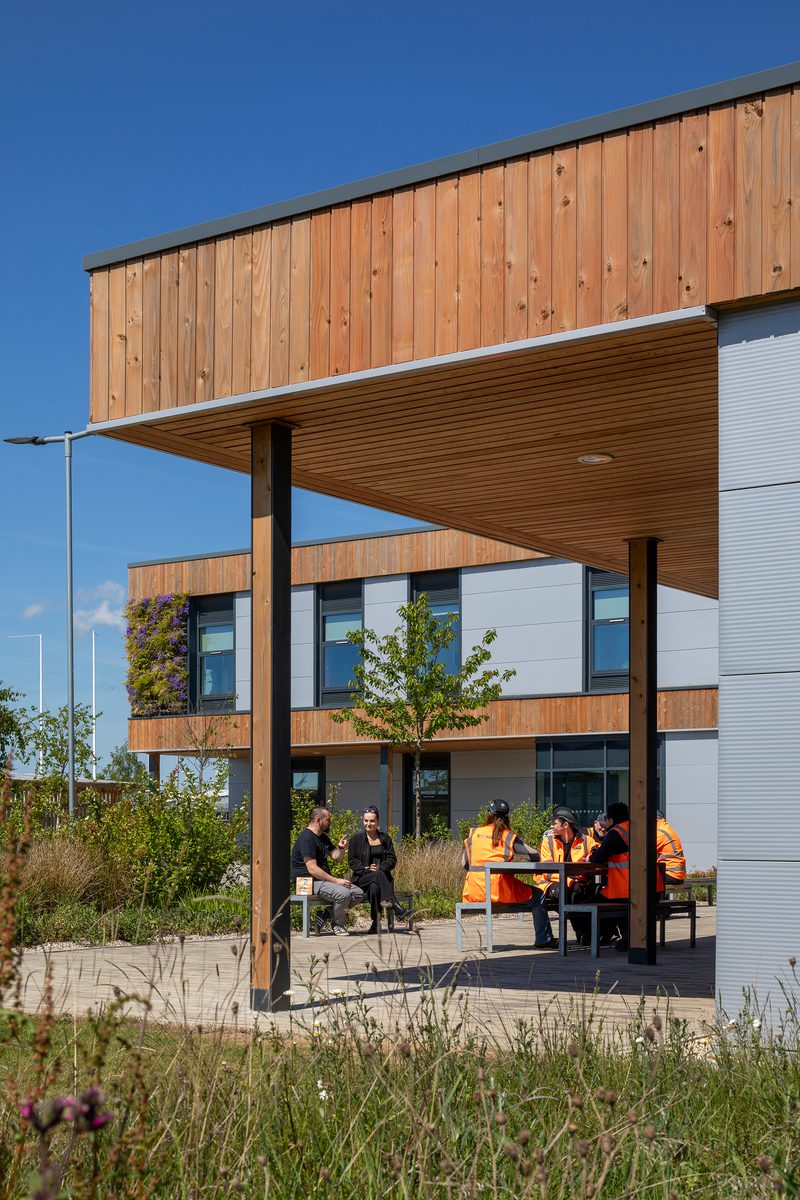
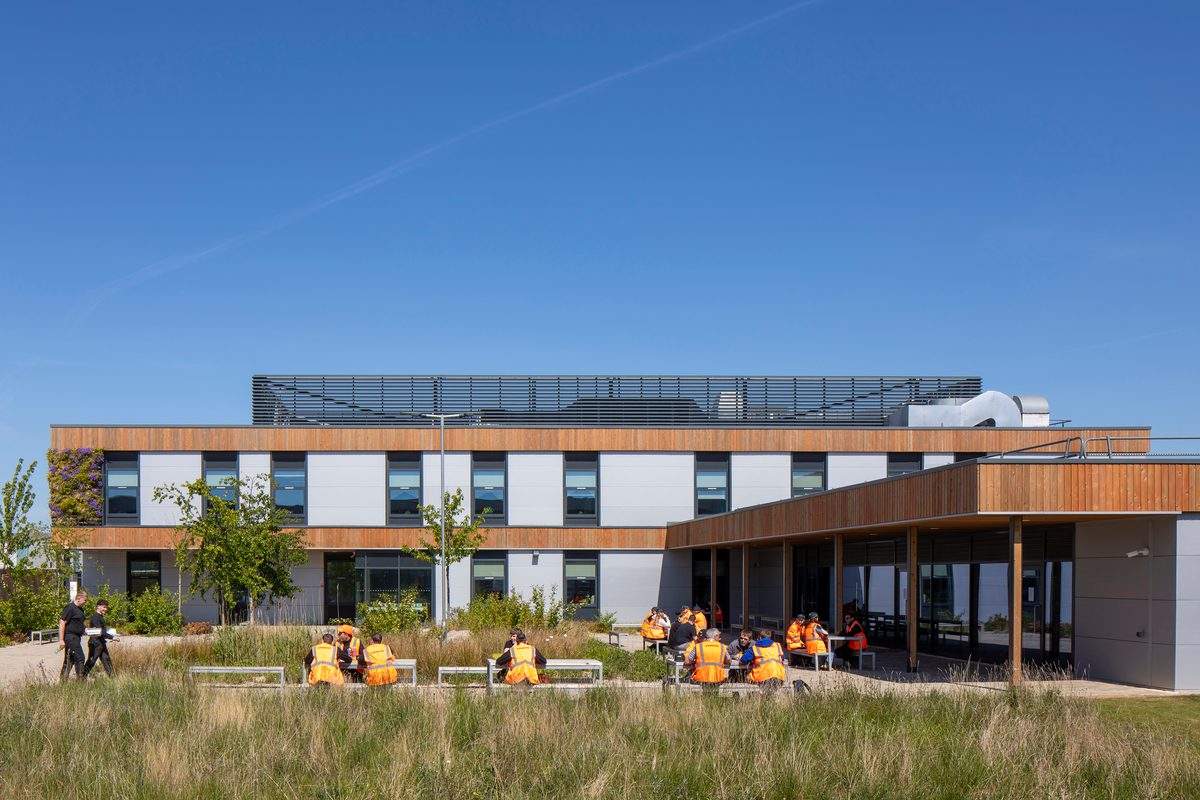
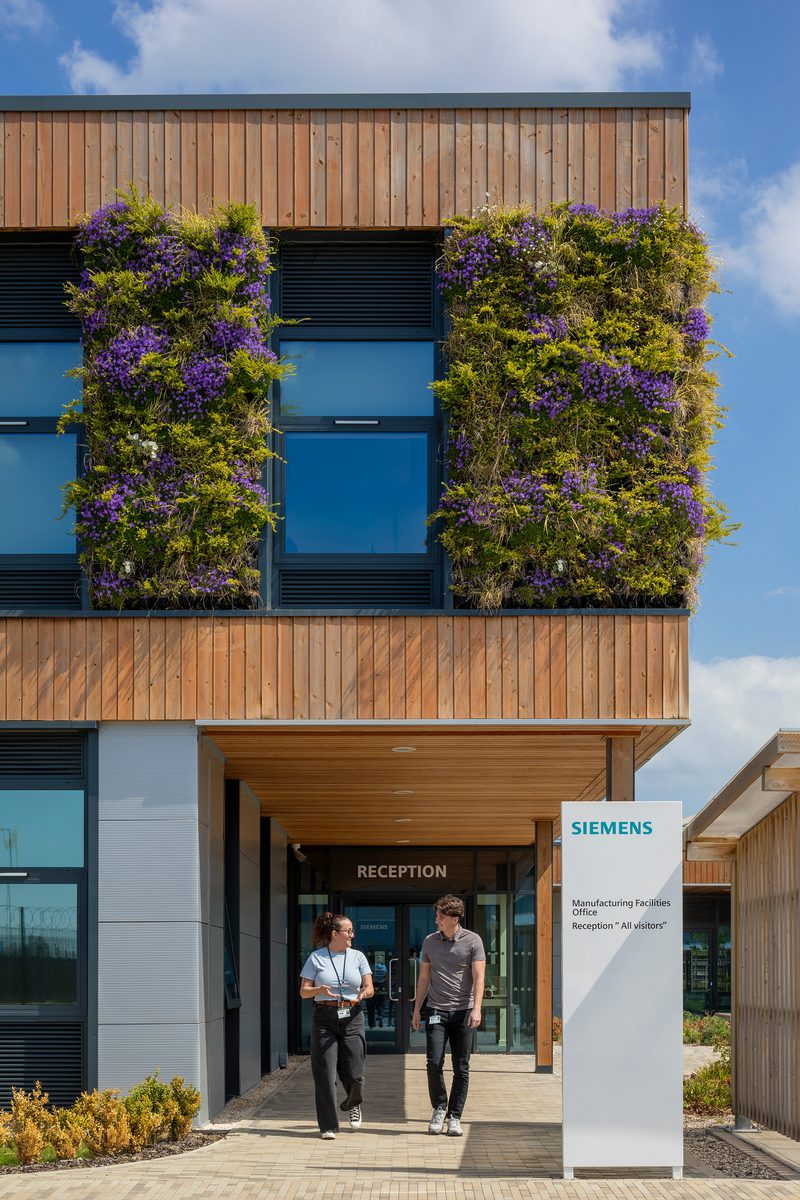
Working with Siemens Mobility’s Train Manufacturing Facility in Goole, our landscape masterplan was designed to make the site more resilient as well as functional. Sustainable drainage systems (SuDS) manage surface water and reduce flood risk, supporting long-term climate adaptation.
Alongside this, new green corridors and planting provide habitats for birds, insects and small animals, bringing biodiversity into what might otherwise be a purely industrial environment.


Cutting whole-life carbon through smarter choices
Resilient places are also low-carbon places. The built environment contributes around 25% of UK emissions, according to the UK Green Building Council4. To respond, carbon must be tackled across the whole life cycle of a project.
- Operational carbon can be reduced through fabric-first design, efficient systems and the integration of renewable energy.
- Embodied carbon is addressed by reusing existing structures, choosing lower-impact materials and designing for reuse or deconstruction.
- Retrofit strategies are particularly effective, improving performance while avoiding the carbon cost of demolition and rebuild. Our retrofit toolkit supports property owners in shaping practical decarbonisation strategies to work towards net zero objectives.
At Vico Homes in Wakefield, we worked on a pilot retrofit scheme to tackle fuel poverty and reduce reliance on fossil fuels. Many homes in the village had no access to gas and relied on oil, coal or electric heating, so a programme of renewable energy upgrades was introduced.
This included installing photovoltaics and air source heat pumps, with bespoke solutions for each property depending on its structural requirements. The pilot has informed further retrofit programmes across the Vico Homes estate, helping to lower energy costs and cut carbon emissions.
Using performance-led design to close the gap
Even with the best of intentions, buildings often use more energy in practice than was predicted on paper. This “performance gap” undermines both resilience and sustainability.
Performance-led design helps close this gap. Thermal modelling and dynamic simulation provide a clearer picture of how buildings will operate, including under future climate scenarios. This insight helps refine key decisions on glazing ratios, shading strategies and ventilation, so that buildings perform as intended.
Our thermal imaging service builds on this, helping to identify areas of heat loss within existing building stock and guiding upgrades that improve efficiency.
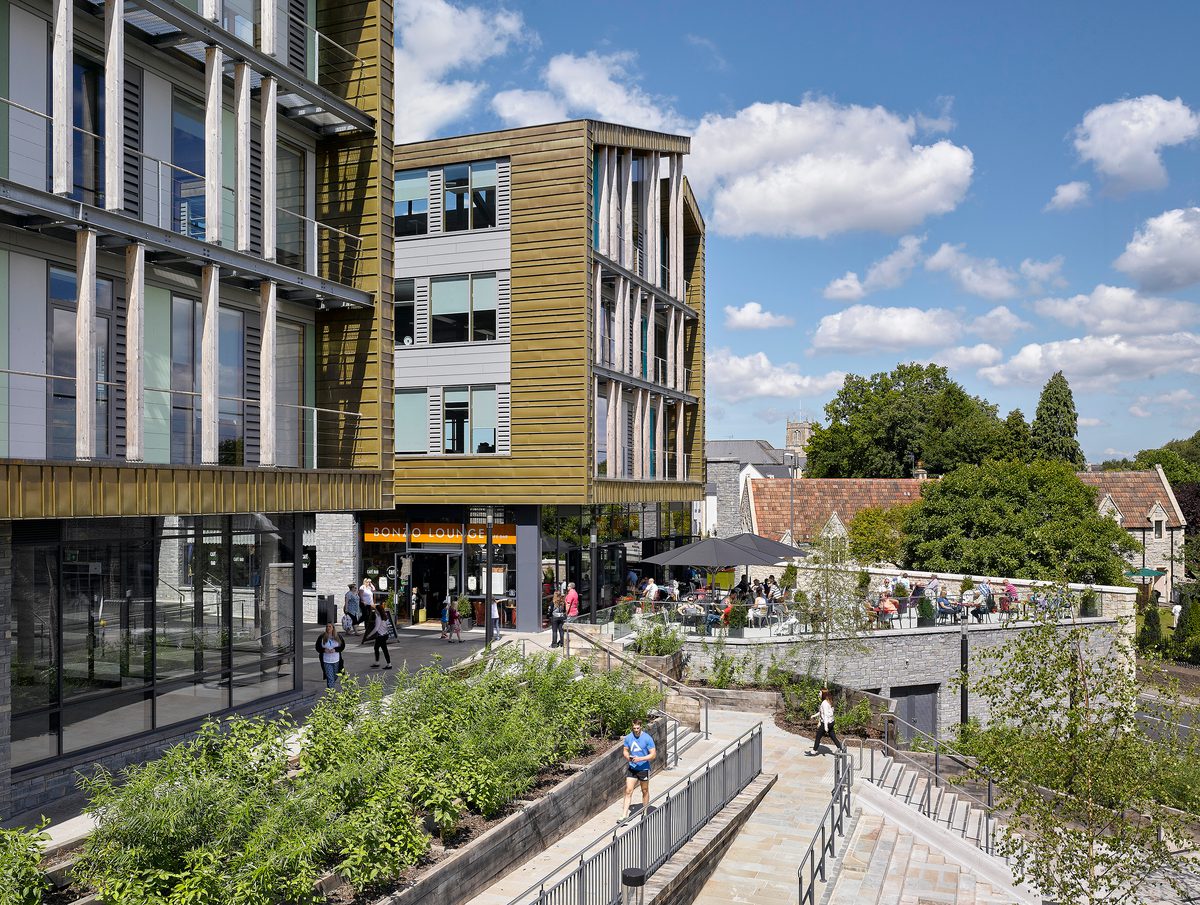
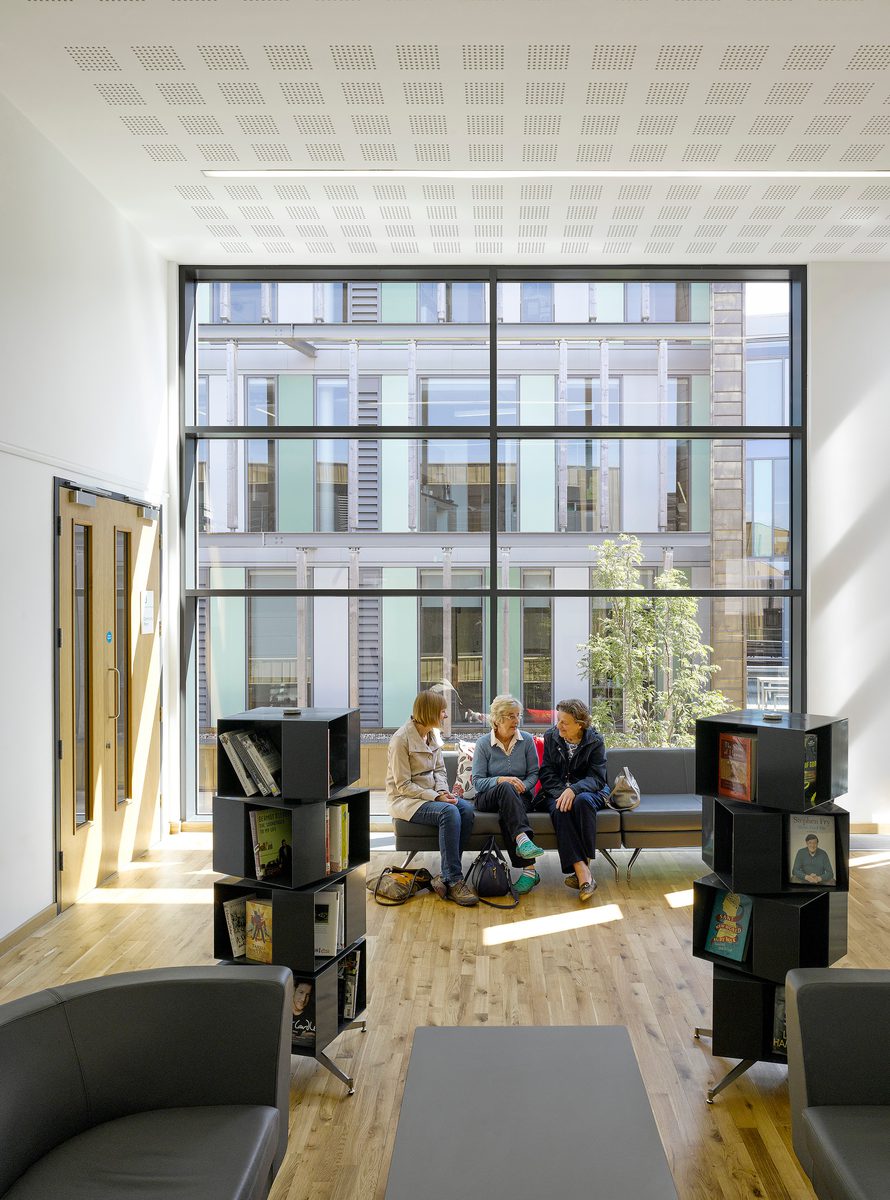
At Keynsham Civic Centre and One-Stop-Shop, our design was informed by detailed studies into building performance, energy usage patterns and working habits. This work gave the team a realistic picture of how the building would function day-to-day, moving beyond theoretical modelling.
In addition, an energy risk register was created to anticipate future energy use and highlight potential areas of concern. Together, these measures guided decisions and supported the delivery of a building that performs reliably in practice. The project won the RIBA South West Sustainability Award, recognising the strength of this evidence-based approach.
Read our project case study on Keynsham Civic Centre and One Stop Shop
Keynsham Civic Centre and One-Stop-Shop


Building fabric and systems designed for resilience
Resilience also relies on the materials and systems that make up a building. A fabric-first approach — prioritising insulation, airtightness and build quality — locks efficiency into the structure for decades. Passive design adds another layer of strength, helping buildings maintain comfortable conditions through natural means such as ventilation and solar shading, rather than relying entirely on mechanical systems.
Selecting materials that are durable, repairable and recyclable reduces long-term costs and waste, while extending building life. Smart systems can then build on this foundation, using responsive controls and monitoring to optimise comfort and energy performance.
At The Pheasantry in Turners Hill, we delivered 26 Passivhaus-certified, 100% affordable family homes for Hastoe Housing Association, using a fabric-first, double-stud timber frame with very low U-values, meticulous airtightness and MVHR.
The simple, compact forms and careful orientation reduce heat loss and energy demand, cutting bills and fuel poverty while maintaining comfort year-round. Completed in 2015, the scheme shows how robust fabric and passive measures can lock in performance for the long term.
 The Phesantry, Crawley
Shaping resilient places together
Resilient placemaking is about preparing for uncertainty while ensuring that the environments we create continue to deliver value. By designing adaptable spaces, harnessing landscapes for climate protection, cutting whole-life carbon and embedding performance-led principles, we can shape future-proofed places that thrive for decades to come.
This piece is part of our wider Placemaking with Purpose series, exploring how meaningful places are conceived, designed and delivered. If you’re just joining the conversation, start with:
- Reframing placemaking — where we outline the case for purpose-led, design-aware development
- People first— on how identity, inclusion and local need shape successful outcomes
- Rooted in place— a look at how history, context and character shape long-term value
- From strategy to reality – a guide on practical considerations to deliver successful placemaking.
Talk to our team about how resilience can be embedded in your projects — from retrofit strategies and sustainable masterplanning to performance-led design and climate-ready landscapes.
Explore our regeneration projects, and latest placemaking and regeneration insights to see how we are helping clients create places that are adaptable, efficient and ready for the future.
Frequently asked questions
1. What is resilient placemaking?
Resilient placemaking is the process of designing and planning places that can adapt to long-term environmental, social and economic change. It combines flexible buildings, sustainable landscapes, retrofit strategies and performance-led design to create environments that are future-proofed and minimise environmental impact.
2. Why is resilience important in placemaking?
Resilience ensures that places remain valuable and functional as conditions evolve. With increasing climate risks, rising energy costs and changing community needs, resilience helps protect long-term investment, reduce carbon emissions and improve quality of life for people who use those places.
3. How does passive design support resilient placemaking?
Passive design strategies — such as natural ventilation, solar shading, daylighting and building orientation — reduce reliance on mechanical systems. This lowers energy demand, improves occupant comfort and helps buildings perform well under changing climate conditions.
4. What role do landscapes play in climate resilience?
Landscapes can act as natural defences against climate risks. Green infrastructure and sustainable drainage systems manage flood water; while planting and shading reduce overheating. These measures also enhance biodiversity and nature recovery, improve wellbeing and strengthen connections between people and nature.
5. How does whole-life carbon affect placemaking?
Whole-life carbon considers emissions from both building operation and construction. Addressing whole-life carbon through retrofit strategies, low-impact materials and reuse of existing structures is essential for creating sustainable, resilient places.
6. What is performance-led design?
Performance-led design uses data, modelling and simulation to predict how a building will behave in real-life. This helps designers refine decisions on elements like glazing, ventilation and shading, ensuring buildings perform as intended and reducing the performance gap between design and use.
7. How can retrofit contribute to resilience?
Retrofit upgrades existing buildings to improve energy efficiency, reduce operational carbon and extend their lifespan. This avoids the environmental cost of demolition and rebuild, making it one of the most effective strategies for resilient placemaking.
Posted on:
Oct 24th 2025
Topics:
Share on
Related Articles

Thought Leadership
Rooted in place: Placemaking through the local lens
In the third part of our 'Placemaking with Purpose' series, we look into how the most successful places don't start from scratch, but grow from what's already there.
Date: 1 Aug 25
by AHR

Thought Leadership
People first: Designing for community and identity
We explore the social dimension of placemaking and how inclusive design, meaningful engagement and cultural identity contribute to environments that are enriching and enduring.
Date: 7 Jul 25
by AHR

Thought Leadership
Reframing placemaking: How to create places that work in practice
This thought piece series explores how placemaking can be meaningfully applied in practice, drawing on our own project experience, multi-sector insight and interdisciplinary expertise.
Date: 16 May 25
by AHR

Thought Leadership
Optimising university estates to enhance the student experience
As competition among universities intensifies, the role of the campus estate in shaping student experience has never been more important.
Date: 15 Jul 25