
Project News
Setting a new standard in public-facing immersive healthcare education

by AHR
More than a traditional higher education facility, the Daphne Steele Building blurs the boundaries between university, healthcare and community, creating a place where learning and care go hand in hand.
The Daphne Steele Building is the first to open as part of the University of Huddersfield’s groundbreaking National Health Innovation Campus (NHIC), and is already transforming how future healthcare professionals learn.
Designed to immerse students in real-world, hands-on experiences while welcoming members of the public through its doors, the building blends education and community care.
With dedicated, public-facing clinical services, including student-led clinics and a Community Diagnostic Centre (CDC) delivered in partnership with Calderdale and Huddersfield NHS Foundation Trust (CHFT), the building offers patients more choice and access to essential tests closer to home.
The result is a pioneering facility that feels as much like a community healthcare hub as it does an academic university building.
Hear directly from the people who use it every day, as they share how the facility is reshaping what healthcare education can be.
The building has been created in such a way that members of the public and clients of various different organisations, and of our own clinics, can access it and they can feel as if it is a facility that belongs to them."
Tim Thornton
Deputy Vice Chancellor, The University of HuddersfieldAt the heart of the building’s success is its immersive, simulation-led design
We know that healthcare is now being delivered in much broader settings. From a community flat and a replica ambulance bay to a state of the art operating theatre and recovery ward, students can experience and rehearse the full patient journey before ever stepping onto a real ward.


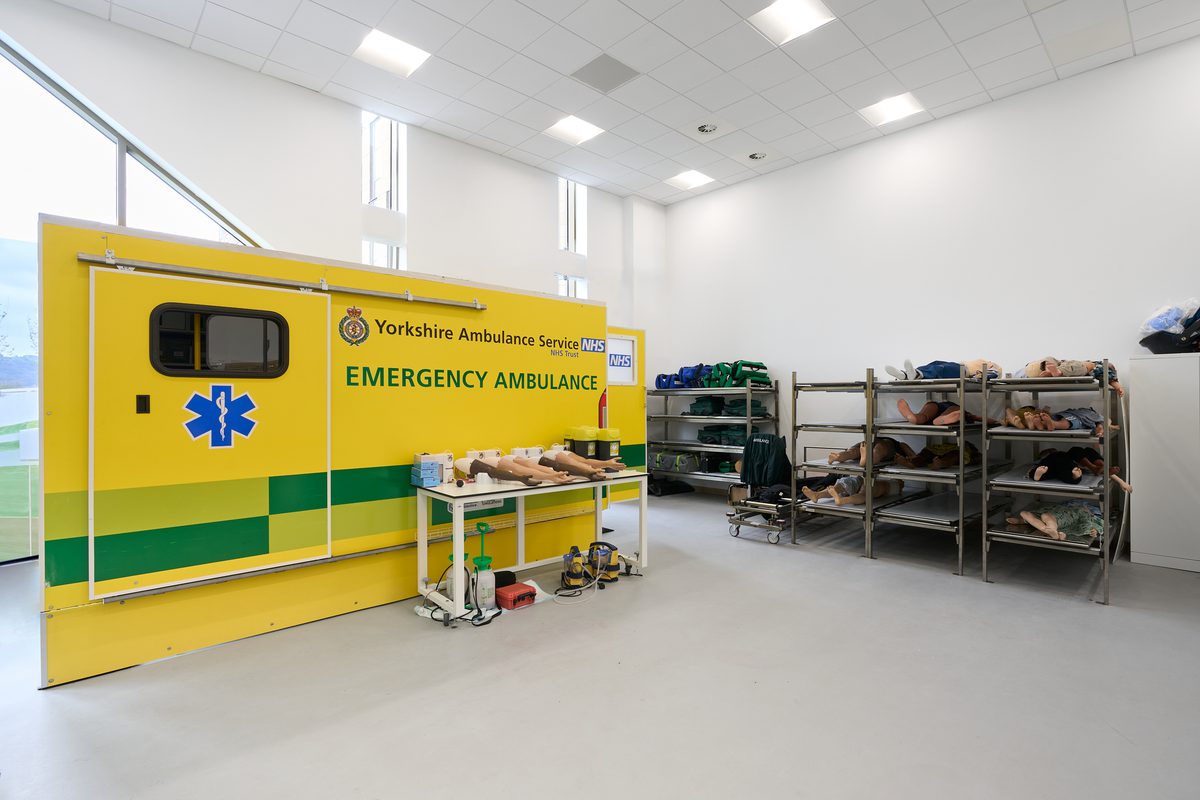
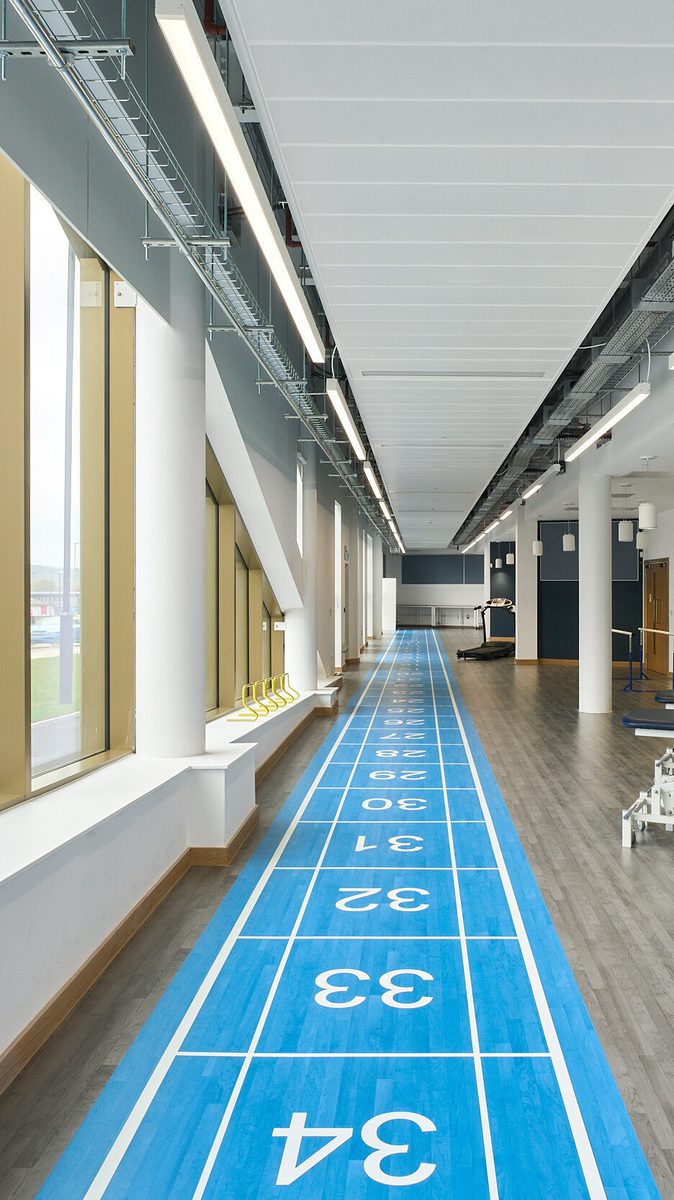
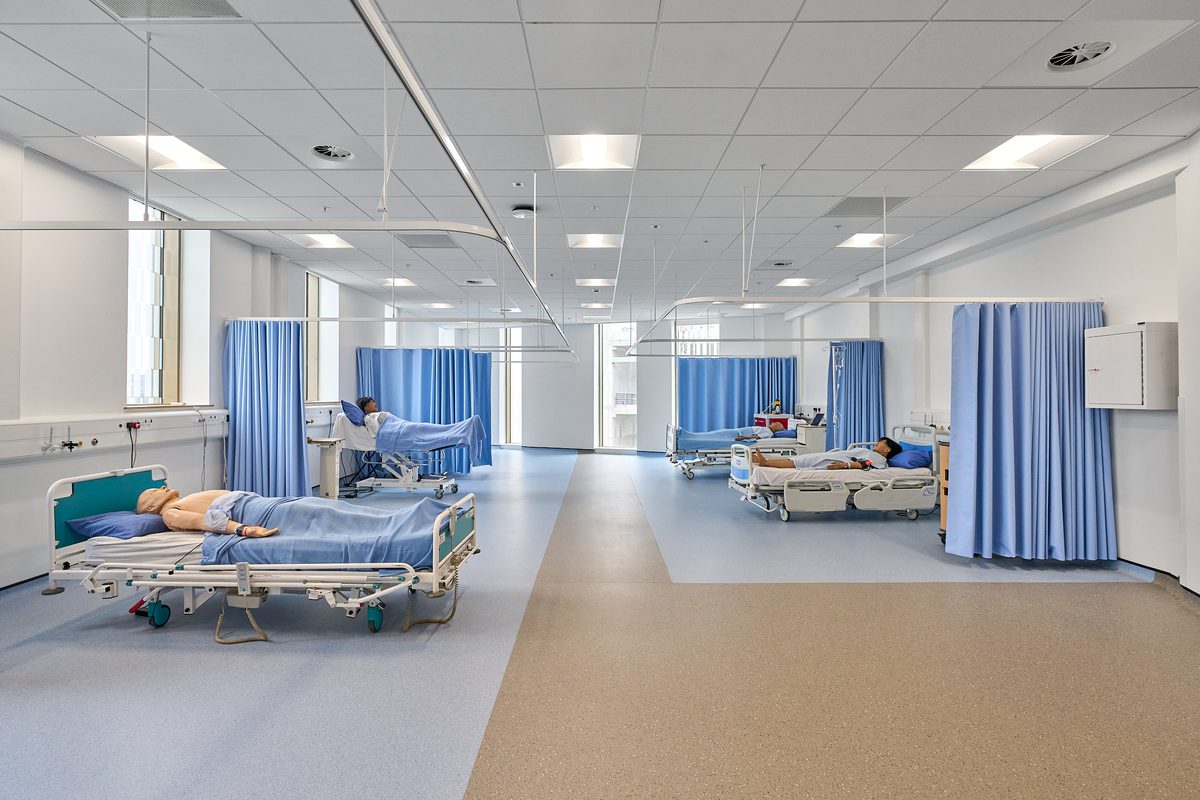
Immersing students in a real environment is a fundamental part of healthcare teaching delivery. This opens up students to the sights, sounds or even smells of a real life healthcare situation.
This approach not only boosts student confidence but also deepens their understanding of care beyond clinical tasks – encouraging empathy, reflection and a better grasp of patients’ social backgrounds and lived experiences.
Beyond its technical spaces, the Daphne Steele Building was designed to be welcoming, accessible and inclusive. Open social areas, health-themed communal spaces like the Pulse cafe, and visibility between departments foster collaboration and break down silos – both for students and the public.
A model for the future
 The Emily Siddon Building, NHIC
We are proud to be working with the University to deliver the Emily Siddon Building, a flagship project currently under construction at the heart of the NHIC.
The specialist facility is a joint venture with the CHFT which also include a CDC, alongside health innovation, teaching in radiography and the capacity for further health trust clients.
The building reflects what can be achieved when healthcare, education, research, business and community work side by side with a shared purpose. From its top floor, which will home a health and wellbeing innovation centre, to its modern clinical and teaching spaces, it offers a glimpse of how the wider campus is evolving - collaborative, inclusive and forward-looking.
The project has brought together the NHS, local councils, third-sector leaders, private industry and the University in a unique partnership. Through this work, we’ve supported hundreds of start-ups, nurtured new approaches to health and wellbeing and created stronger links between research, industry and the communities we serve.
Explore how our work across the higher education sector is transforming the built environment.
Posted on:
Oct 18th 2025
Topics:
Share on
Related Projects

HEMISPHERE One
Located on the new Paddington Village development next to our recently completed The Spine, our new Grade A office building is designed with health and wellbeing at the fore.

Thrive Health and Wellbeing Centre, School of Health and Society
Designed to transform healthcare accessibility and education, the new centre is one of the first in the UK to use 'trauma informed design' throughout.

Oastler Building
The new University building pushes the boundaries of what is possible, creating a world-class teaching and learning space that paves the way for further local regeneration.