Project News
Transforming healthcare education by putting the patient journey at the heart of its design

by AHR
From the very beginning, the idea of the patient journey helped shape the thinking behind the Daphne Steele Building, which forms part of The University of Huddersfield’s National Health Innovation Campus (NHIC).
Our innovative design for the Daphne Steele Building reimagines the student experience by embedding the full patient journey into the learning process from day one. The building blends community healthcare spaces, including a Community Diagnostic Centre, with immersive simulation facilities and specialist life science laboratories, creating a vibrant, real-world environment that mirrors how patients move through the healthcare system.
Students gain early exposure to both real patients and simulated scenarios, developing a deeper understanding of care from emergency response to aftercare. Public-facing clinics and a community flat enrich this hands-on approach, while also supporting interdisciplinary collaboration across a range of health and social care disciplines.
The building’s thoughtful, biophilic design enhances wellbeing while inspiring academic staff to adopt more practical, patient-focused teaching methods. Rather than teaching subjects in isolation, the layout encourages a more connected and collaborative approach.
We sat down with Kevin Riley, Technical Services Manager at the University, to talk about how replicating real-life healthcare pathways is transforming student readiness and professional development.
Discover more in the video below.
Creating a narrative through the building
The journey begins outdoors, with a dedicated simulation area for paramedic training, allowing students to practice patient pick-ups in realistic conditions.
Inside, the layout supports fluid movement through simulated hospital environments, complete with clinical treatment areas, enabling students to mirror real-life transitions from ambulance to ward.
Going back to the very beginning of the journey with the paramedics, it was important that they could use their stretchers just as they normally would, bringing the patient into the building, into the lifts, and up into different areas, just like in a real hospital. We wanted to replicate that experience as closely as we could."
Kevin Riley
Technical Services Manager, The University of HuddersfieldRob says, The ability to simulate the movement of people and equipment around and a transition between one specialist area to another became just as important as those specialist areas.
Beyond its physical design, the Daphne Steele Building strengthens ties between the University and local NHS Trusts. Students now train in multidisciplinary teams, nurses working alongside physiotherapists and paramedics - just as they will in professional settings.
This hands-on, collaborative model is already making an impact, with students showing higher levels of preparedness and a deeper understanding of the roles of their future colleagues.
You can discover more about how our design has facilitated this innovative way of learning and teaching by visiting our project case study


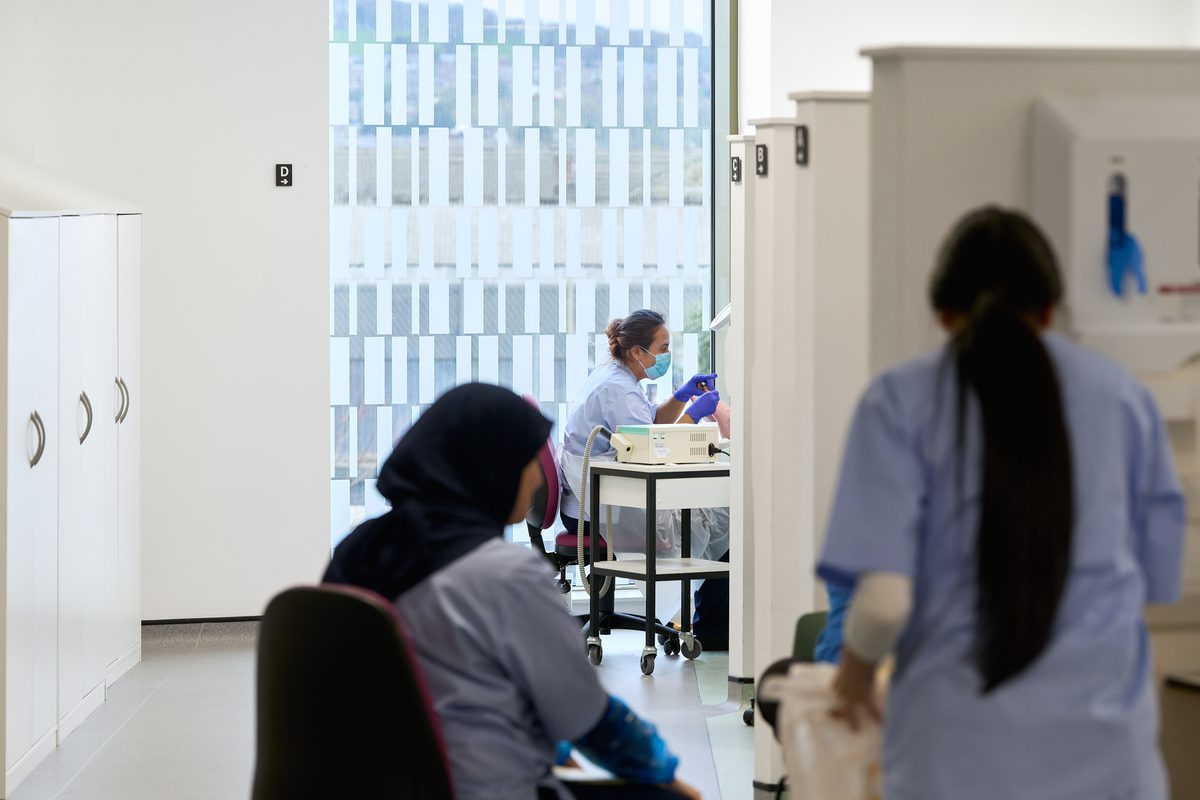
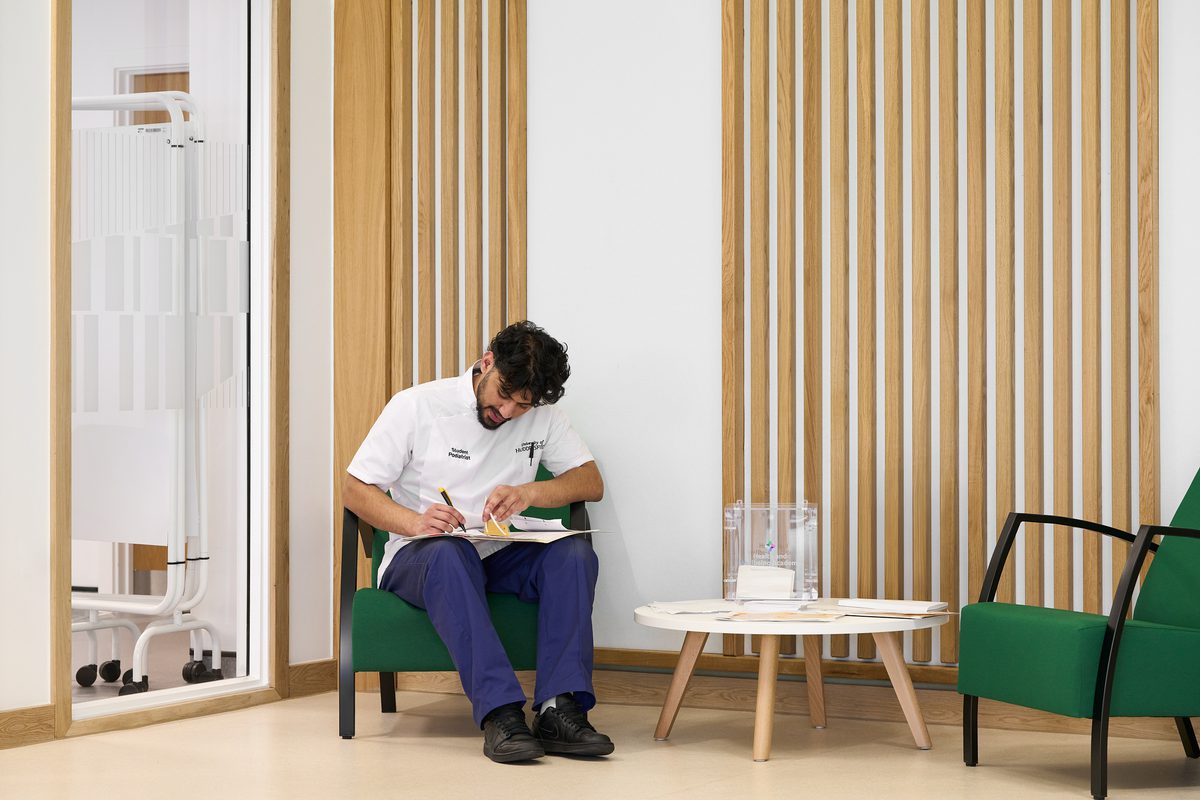
The Daphne Steele Building forms part of a strategic masterplan that brings together academia, the NHS and industry partners, to drive transformation in health, education and community wellbeing.
Discover more about how we helped to shape it here.
Posted on:
Oct 19th 2025
Topics:
Share on
Related Projects

Emily Siddon Building
Part of the University of Huddersfield's National Health Innovation Campus, with state of the art teaching and NHS diagnostic spaces.

The Spine
Our design utilises pioneering research in innovative ways, creating an exceedingly positive and responsive workplace that will be one of the healthiest workplace environments in the world.

HEMISPHERE One
Located on the new Paddington Village development next to our recently completed The Spine, our new Grade A office building is designed with health and wellbeing at the fore.