Practice News
Always evolving: How AHR is harnessing artificial intelligence to unlock greater value

by AHR
Artificial Intelligence (AI) is redefining the approach to shaping the built environment in the UK. At AHR, we are embracing it with the same creative openness and rigour that characterises everything we do.
This article outlines our transparent approach to AI: how it enhances our human expertise, accelerates innovation and helps us deliver exceptional outcomes for the built environment.
Embracing the next technological evolution
Continuous improvement and learning are not reactions to change, they are part of our culture. In navigating any project we are always asking how we can work more creatively, respond to project demands more intelligently and ultimately deliver greater value for our clients.
The opportunities provided by AI are a natural extension of our process. However, we are clear about its purpose. We do not use AI to make decisions on our behalf, we use AI to augment critical analysis of our work and to open and communicate creative possibilities. Used responsibly, AI acts as a powerful new tool, giving our creative thinkers more space to think, critique, reiterate design and communicate ideas with clarity and conviction.
The value of the professional
It is worth stating clearly: at AHR, AI does not design buildings or solve complex technical challenges. Our people do.
The creative judgement required to interpret a client’s vision, to find the design idea that unlocks a difficult site, ensuring strict technical compliance and balancing architectural ambition with commercial realities, across every stage of a project, requires genuine creative intelligence. These skills are the product of years of professional training and hands-on experience. That expertise does not diminish because a new digital tool exists; it becomes more valuable.
There is sometimes an assumption that AI will erode the role of the creative professional. We see it differently. It takes real design skill, technical knowledge and creative thinking to direct AI effectively and to analyse the outcomes. The construction design professionals who can ask the right questions, interpret outputs with a critical eye and apply them purposefully in the service of a design idea will deliver far greater results and quality than the technology ever could alone. Results that ultimately benefit the people we work with.
What AI gives our teams is the ability to think more expansively and respond more quickly. We can explore more design directions at early stages, iterate ideas expediently and in greater detail and bring more compelling, more considered creative options to client conversations sooner in the process. AI augments our capability, it does not replace our craft.
How we use AI for image generation: A spectrum of application

We use AI across a range of tasks, and we are open about that. Our approach sits on a spectrum of application, always guided by what best serves the project and the client:
- AI-enhanced (refining and editing): At one end, AI supports with straightforward enhancements to our visual output, such as refining image quality, adjusting colour, lighting, or removing distracting elements. The design thinking and creative authorship are entirely ours; AI simply improves how we communicate it.
- AI-assisted (atmosphere and style): We use AI to explore atmosphere and visual style of our imagery. This allows us to present our ideas in different ways to suit the audience, and helps clients engage with a design direction at an earlier stage than was previously possible, supporting richer, better-informed conversations throughout the design process.
- AI-collaborative (rapid iteration): During early concept stages, AI allows us to rapidly iterate options. This could be for testing materiality, colour or form, through to carrying out iterative options analysis. This brings a wider variety of possibilities to the table, reducing risk and helping clients engage with and make strategic decisions about a design with total confidence.
- AI-generated (bespoke inspiration): On the occasions when we use full text-to-image generation, it is strictly to create bespoke reference imagery that helps convey an idea or concept, rather than relying on generic existing imagery. We are always explicit when imagery is AI-generated in this way, clearly presenting this as design inspiration and illustrative examples, not as a design proposal. Transparency is a professional responsibility we take seriously as a practice built on honesty and integrity.
We confirm that we comply with The Code of Practice on transparency of AI-Generated Content (in support of compliance with Article 50(4) of the AI Act). In particular, we do not produce AI content which falls under a) deep fakes or b) AI-generated or manipulated text which does not undergo human review.
We have navigated change before
This is not the first time our profession has experienced a significant technological change.
When Building Information Modelling (BIM) emerged around fifteen years ago, we were early adopters. We recognised it was not just new software, but a genuinely transformative way of working, one that would change how we design, coordinate, collaborate with fellow professionals and deliver.
We invested in BIM, developed deep expertise in its application and championed its adoption across our offices before it became standard practice. That early commitment made our work demonstrably better and it gave our clients a richer, more reliable service as a result.
AI is following a similar path. We are engaging with it now, with the same energy and the same conviction, because we believe that the practices which develop genuine expertise today will be best placed to deliver the highest quality design and professional service tomorrow.
The creative possibilities it opens up are significant, and we intend to explore them fully, always with the goal of augmenting what our talented people can do, never of replacing their judgement or creative voice.


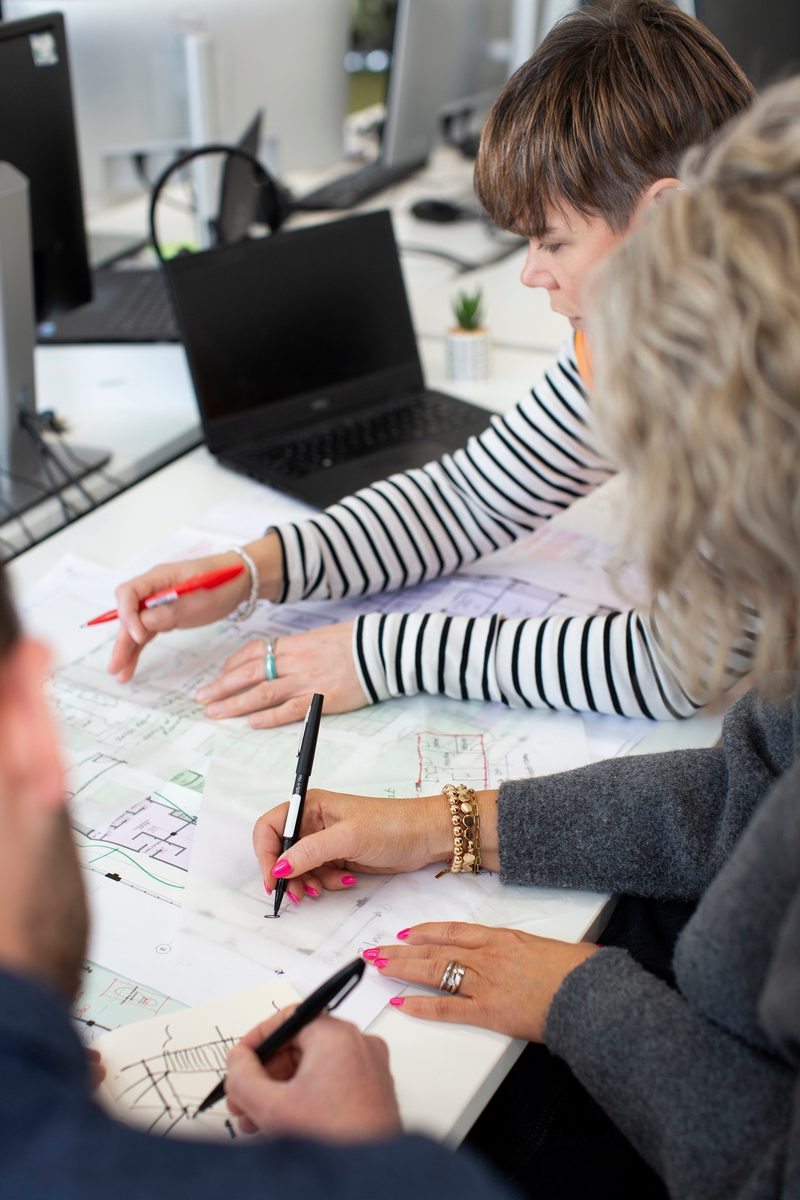
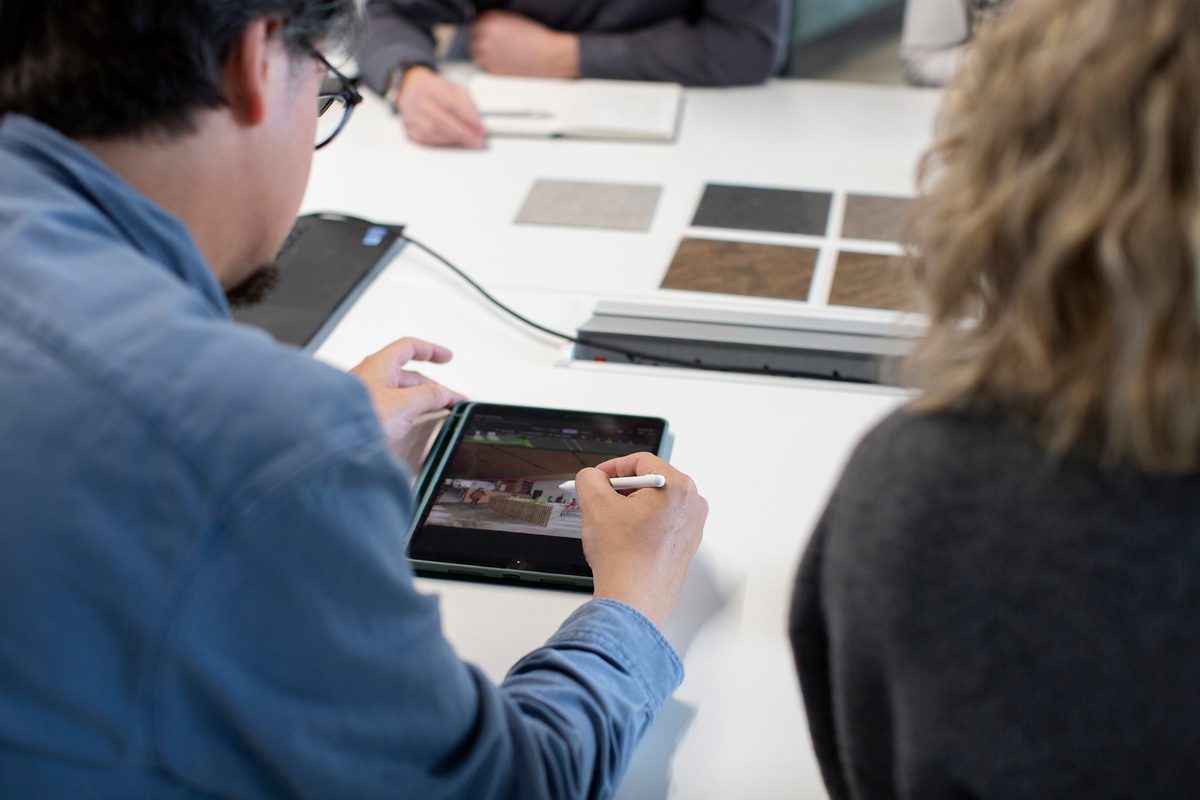
Our experts are at the heart of it
What AI cannot replicate are the human qualities that define how we work. The ability to build trust with a client over years, navigate nuanced stakeholder relationships, lead multi-disciplinary teams, coordinate and develop design solutions, and respond with empathy, appropriateness and design intelligence to the unique needs of each site, brief and community - these are irreplaceable.
Our teams are passionate about their craft, collaborative and focused on the long-term relationships that produce the best design outcomes. Creativity thrives in that environment and AI, used thoughtfully, supports and amplifies it. The goal is always the same: better design, better buildings and better places. AI simply provides another means of supporting that ambition.
Always evolving
Architecture and the built environment are constantly changing. The needs of our clients, the challenges facing our towns and cities. As we look to the future, we remain committed to exploring how design tools can elevate our creativity and the service we provide, while always preserving the human connection that sits at the heart of AHR. We will continue to use AI responsibly and transparently, and with genuine curiosity, always bringing it back to what matters most: great design that delivers genuine, lasting value for the people we work with and places we shape.
For more information about how we work and our approach to design, please get in touch
Frequently asked questions
At AHR, we use AI as an advanced tool to augment our human expertise, not replace it. Across our practice, we apply a spectrum of AI, ranging from AI-assisted visual enhancements and atmospheric exploration to rapid design iteration. By leveraging AI, our architects, building surveyors, interior designers, landscape architects and masterplanners can develop ideas faster and explore more creative possibilities, ultimately delivering more considered and innovative solutions for the built environment.
No. At AHR, creative judgement and professional expertise remain at the heart of everything we do. We believe that professional training, technical knowledge, and the ability to interpret a client’s vision are irreplaceable. AI is used solely to support our teams in visualising ideas and communicating concepts with greater clarity. Every design decision, technical specification, and project outcome is driven by our talented professionals, ensuring the highest standards of architectural integrity.
By integrating AI into our workflow, we enhance the efficiency of the entire project lifecycle, from the early concept and feasibility stages through to technical coordination. AI allows our teams to test more design directions during early engagement, helping clients make strategic, well-informed decisions with confidence. This accelerates innovation while maintaining the rigour required for complex building consultancy briefs, ensuring our clients receive exceptional value and faster project development without compromising on quality.
Integrity is a core value at AHR. We believe in being open about our use of technology, particularly when using AI for bespoke inspiration or illustrative imagery. We always label AI-generated content clearly, ensuring clients understand that these are exploratory design tools rather than final building proposals. This transparency is a professional responsibility that builds trust and ensures our clients remain fully informed throughout the design process.
The AHR approach is built on a foundation of continuous improvement, deep technical expertise, and genuine human connection. As a practice, we focus on long-term relationships and the ability to navigate complex stakeholder requirements with empathy. Whether it is a large-scale masterplan or a detailed building survey, our goal is to deliver better design, better buildings, and better places. We combine a creative, curious mindset with a legacy of adopting transformative technologies, like BIM and now AI, to ensure we remain at the forefront of the architecture and construction industry.
Share on
Related Articles

Practice News
We've been appointed to Hull City Council’s Engineering and Regeneration Professional Services Framework
We're excited to be one of five suppliers selected across two lots: 3a – Building Construction and 3b – Housing Strategy and Appraisal Services.
Date: 6 May 26
by AHR

Awards
Celebrating our shortlist at the Insider Wales Property Awards
We're shortlisted for Architectural Practice of the Year at this year's Insider Wales Property Awards, celebrating our work shaping communities across Wales.
Date: 27 Apr 26
by AHR

Practice News
Celebrating our new building consultancy director
We’re pleased to share a positive step forward for our London building consultancy team as Richard Rudd moves into the role of director.
Date: 1 Apr 26
by AHR

Thought Leadership
The Future Homes Standard has arrived: what it means for residential development
David de Sousa explores the Future Homes Standard, the impact on costs, heat pumps, solar PV and and transitional arrangements for developers.
Date: 30 Mar 26

by David de Sousa
Director, Architecture